

“Somebody said I’m the Ernest Hemingway of 140 characters.” – Donald J. Trump
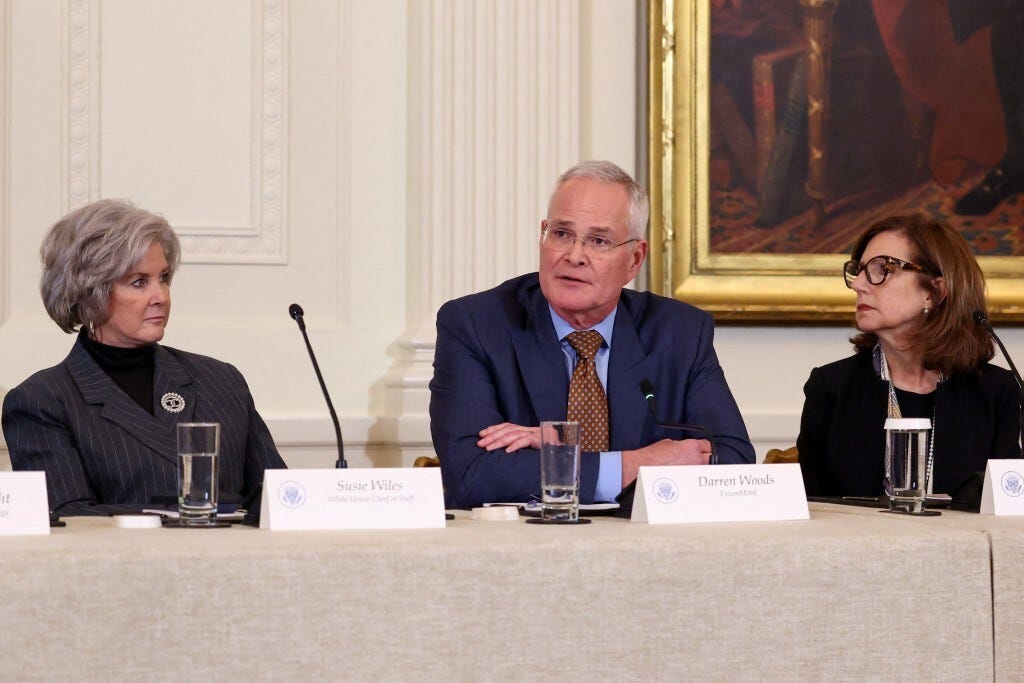
On Friday, January 9, a most remarkable meeting took place in the East Room of the White House. Less than a week earlier, the US military had captured Venezuelan President Nicolás Maduro and flown him to New York to stand trial on criminal charges, and an ebullient President Donald Trump had assembled a who’s who of oil and gas executives to divvy up that country’s spoils. In his opening remarks, Trump informed the gathering that the intent was to drum up $100 billion “of their money, not the government’s money” so that they could help him with his goal of “getting the oil prices down.” That practically everyone in the room would prefer higher oil prices didn’t stop most of them from nodding their heads, mouthing niceties, and occasionally looking at their watches.
There was, famously, one executive who didn’t go along just to get along. When called upon by the president, ExxonMobil’s CEO Darren Woods went, well, full Exxon:
“With respect to Venezuela in particular, we have a very long history in Venezuela. In fact, we first got into Venezuela back in the 1940s. We’ve had our assets seized there twice.
And so you can imagine to reenter a third time would require some pretty significant changes from what we’ve historically seen here and what is currently the state. If we look at the legal and commercial constructs and frameworks in place in Venezuela today, it’s uninvestable. And so significant changes have to be made to those commercial frameworks, the legal system, there has to be durable investment protections and there has to be a change to the hydrocarbon laws in the country.
We’re confident that with this administration and President Trump working hand-in-hand with the Venezuelan government that those changes can be put in place.”
Although the President didn’t seem too piqued by Woods’ words in the moment—he’s often quite amenable to logical arguments delivered politely in person—the media predictably kicked up a firestorm, focusing near-exclusively on the word “uninvestable” while systematically downplaying the equally operative word “today.” There’s no time for nuance in the wedge-driving business, and Trump dutifully fell into the trap when he later threatened to exclude Exxon from Venezuela, claiming he “didn’t like” the comment and that the company was “playing too cute.”
As anybody who has interacted with Exxon can attest, it is one of the most well-run enterprises in the world. It has a near-maniacal focus on discipline, especially in capital allocation, safety systems, and operational execution. While critics contend the same culture is rigid, top-down, and slow to adapt, few can argue with Exxon’s long-term success. At the time of this writing, its market capitalization is north of $570 billion. It sports what many call a fortress balance sheet, and it holds ownership interests in several of the most lucrative hydrocarbon resources in production today. Internally, there is a hardwired belief that the company’s culture is directly responsible for this success, and preserving it is the first and most important task of its leaders.
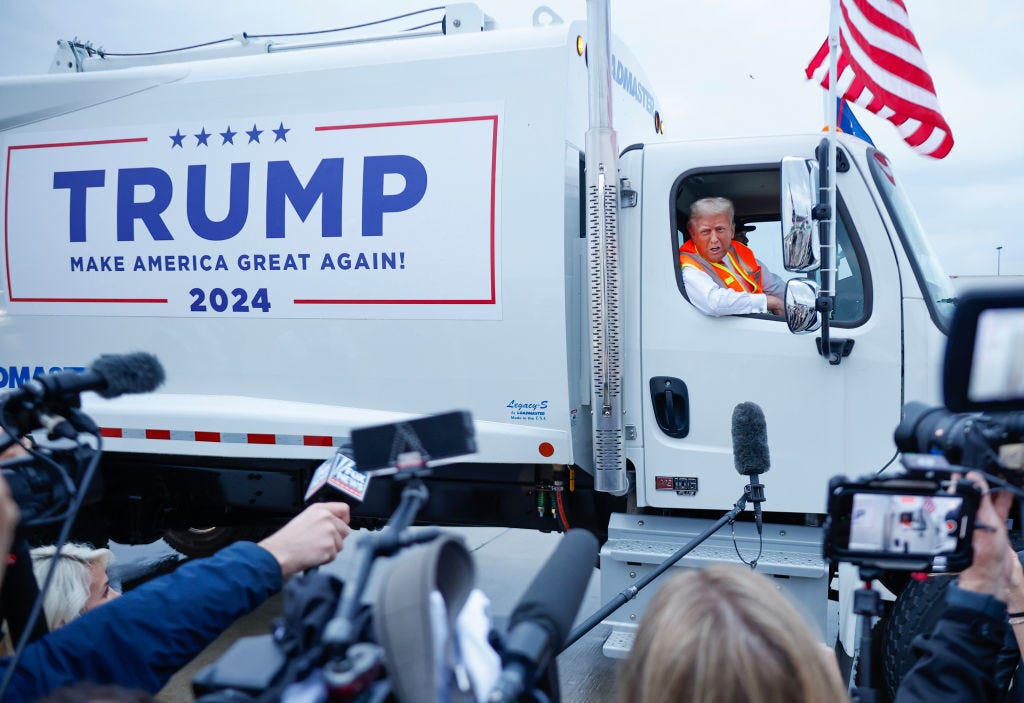
In stark contrast is Trump’s whirlwind approach to his incredibly ambitious agenda. Where Exxon is cautiously disciplined, Trump is unabashedly improvisational, regularly employing wild behavior as a negotiating tactic. His style not only blurs the line between rhetoric and governance; it downright collapses it, and rapid policy shifts are often concocted in real-time on social media rather than through formal processes. To the frustration of his many critics, Trump’s tactics are often successful in their own way, most especially as measured by the frustration they cause among his many critics.
While it might be easy to brush off this relatively minor dustup as yet another episode of gotcha journalism executed by the legacy media, there is likely far more meaning in that short exchange. If we are correct, the consequences for much of Trump’s remaining time in office—in particular, as they pertain to the energy markets and the US posture toward Russia once the war in Ukraine ends—could be quite profound. Let’s unpack a bit more of the relevant history to find out why.