

“Ten flashing lights are a nuisance, but 500 are fantastic.” – Christoph Waltz
Hydrocarbons are of little utility to their owners until they arrive at a machine capable of extracting useful work from their embodied energy. What’s more, safely handling and storing toxic sludges and dangerous gases typically comes at significant expense, especially in highly regulated regions of the world with strict pollution controls and worker protections. As a result, natural gas, for example, often trades negative in the Permian Basin and Western Canada, while commanding a premium when delivered to Europe or Asia in the form of liquefied natural gas (LNG). It is a nuisance in one place and a prized commodity in the other.
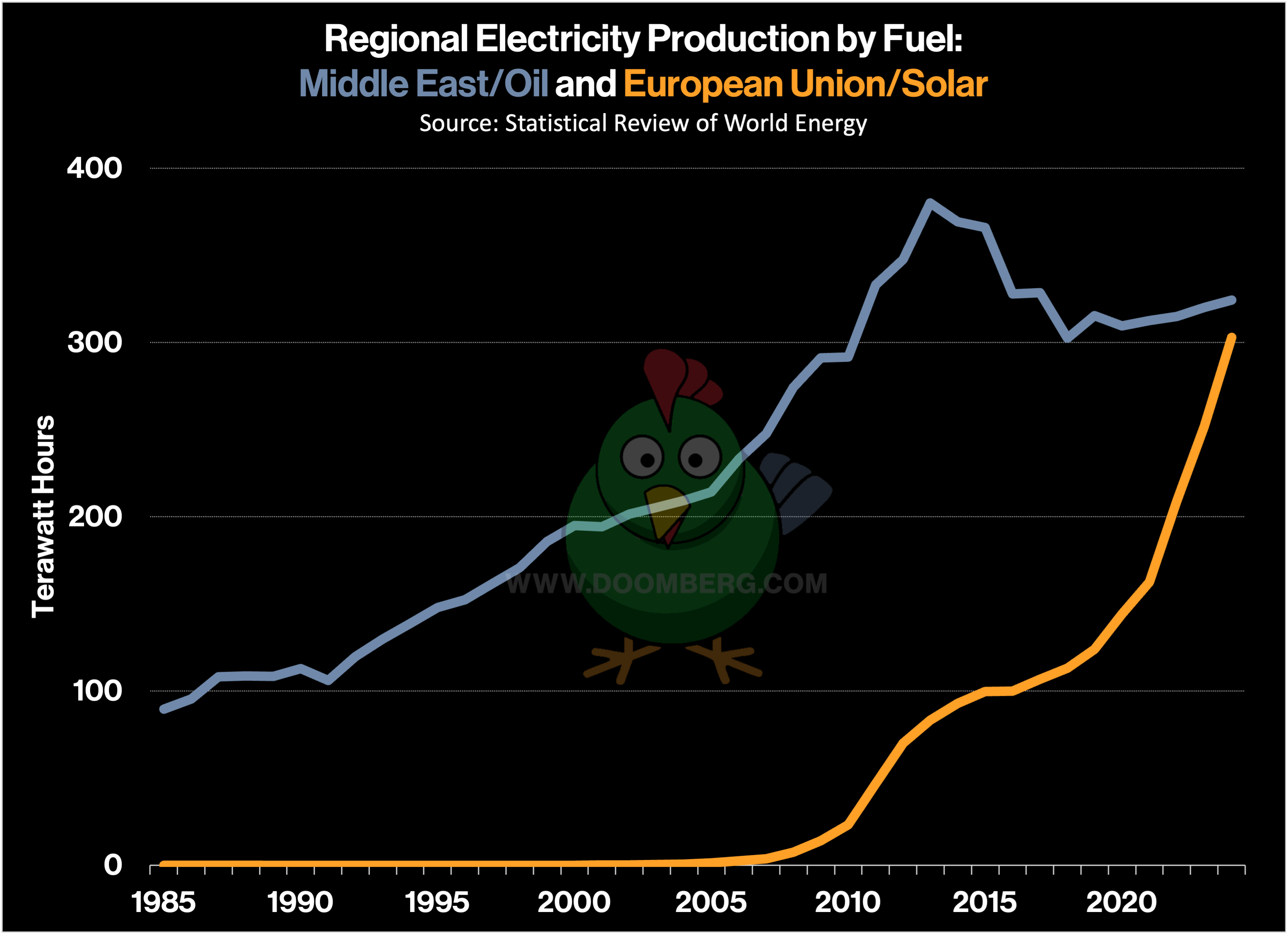
Consider the Middle East, a region endowed with such an enormous accumulation of hydrocarbons that copious amounts have been gratuitously consumed for decades. It might surprise readers to learn that some 1.8 million barrels per day (bpd) of oil are still burned to produce electricity there, a practice thought to be confined to more backward parts of the world, like the US Northeast during a cold snap. According to the latest data from the Statistical Review of World Energy, the Middle East generated more power from oil than the entire 27-member states of the European Union did from solar in 2024! Take that tidbit to your next cocktail party.
If the Middle East has been wanton in its use of local oil, it has been downright negligent with its abundance of natural gas, a fuel most of the region has largely avoided developing. Although Iran, Qatar, and Saudi Arabia are significant players, the remaining countries combined—including Bahrain, Iraq, Israel, Kuwait, Oman, Syria, and the United Arab Emirates (UAE)—produced less natural gas in 2024 than did Canada. Even with the big three in the mix, the US alone brought 40% more to the surface than the entire Middle East in the same year.
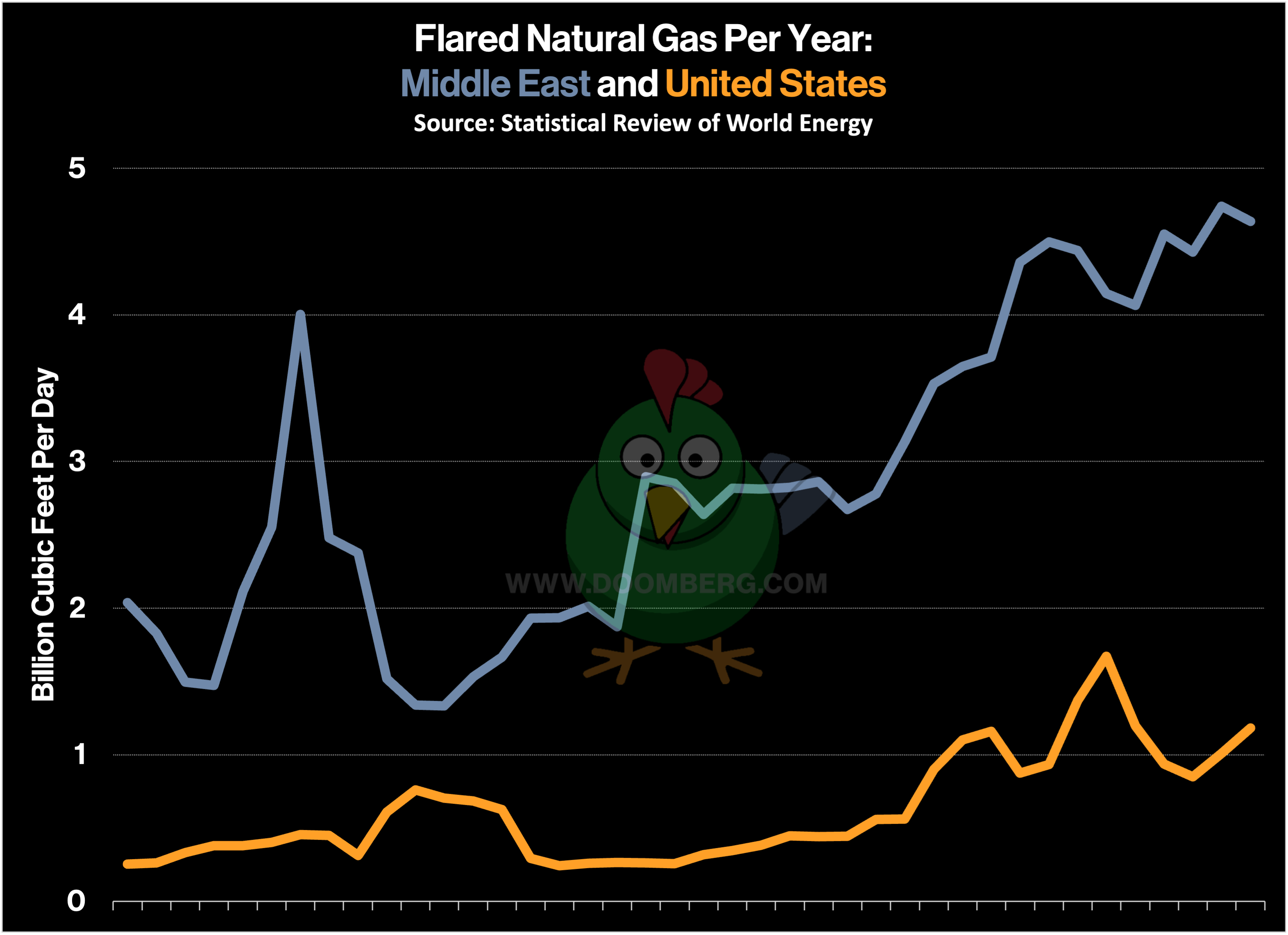
To make matters worse, a material portion of the gas produced in the Middle East has been flared in the field. Despite increasing pressure to reduce such emissions, the amount of gas flared in the region has been climbing steadily higher, reaching nearly 5 billion cubic feet per day (bcf/d) in 2024. By comparison, the US flared just over 1 bcf/d.
As the global machinery to safely collect, transport, and extract work from natural gas proliferates, the fuel’s importance to the world economy continues its relentless ascension. However belatedly, the Middle East is joining the fray. Within the next half decade, the natural gas landscape in the region will be all but unrecognizable, and this rapid pace of change will undoubtedly carry global ramifications. Let’s break out the sunscreen, dodge some cruise missiles, and head to the region to assess for ourselves.