
Borrowed Time
The European Union is now at war with everybody. Political heads must roll.

“The only thing that saves us from the bureaucracy is its inefficiency.” – Eugene McCarthy
In the months after Russian President Vladimir Putin launched the war in Ukraine, few European politicians were as hawkish on the matter as Kaja Kallas, then Prime Minister of Estonia. She insisted that the only acceptable outcome was a full military defeat of Russia, that Europe must overcome its fears of escalation, and that even a nuclear war was among the acceptable outcomes, as it would likely “happen in the conflict zone and not on the alliance’s soil.” She also loudly insisted that “there must be no business with Russia” whatsoever, drawing a hard moral line on sanctions and other economic restrictions, regardless of the impact on European companies. This war was between one aggressor and one victim, between right and wrong, and sides must be chosen.
Imagine the shock felt by even her strongest supporters when it was revealed in August of 2023 that her husband was both a major shareholder in and chief financial officer of an Estonian logistics company that had continued to do lucrative business with Russia long after the war broke out. We turn to Estonian World for the sordid details:
“Stark Logistics, a transport company partly owned by the Estonian prime minister Kaja Kallas’s husband Arvo Hallik, has continued to do business with Russia during the war in Ukraine – despite the prime minister’s criticism of companies doing business with Russia…
Publicly available records show that the firm partly owned by the prime minister’s husband has arranged shipments worth at least $17 million to Russia during the war, the Estonian newspaper Eesti Päevaleht reported. The company earned €1.1 million from its Russian shipments in 2022 and nearly €475,000 euros this year. In total, the company has earned about €1.5 million from these shipments, according to data published in Eesti Päevaleht.”
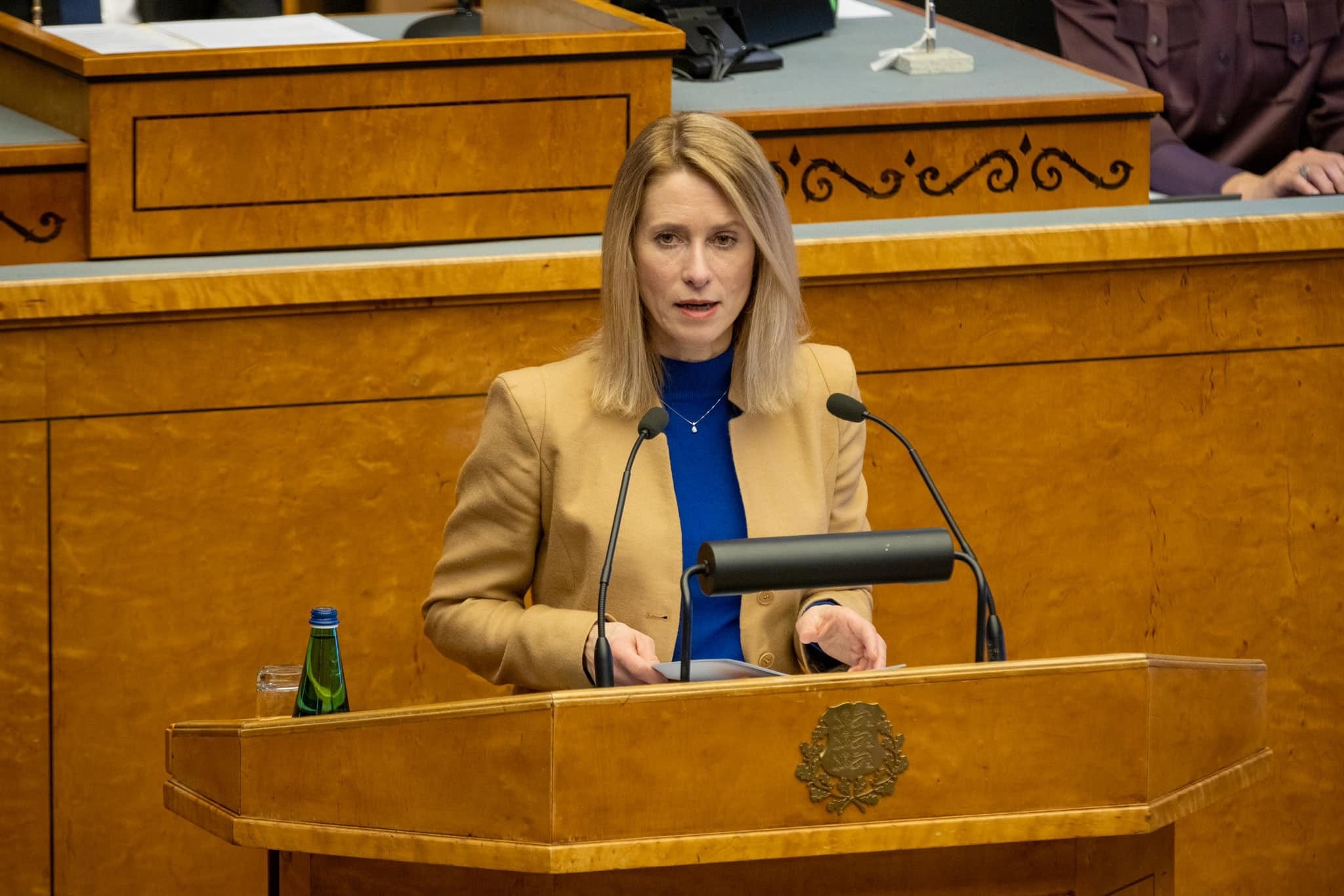
For most politicians—at least those with even a minimal capacity for shame—revelations of such rank hypocrisy would have sunk their careers. Indeed, with her polling numbers plummeting and calls for her resignation as Prime Minister growing louder, it looked for a while like she was finished. Inexplicably, the power brokers in Brussels instead felt Kallas had earned a promotion, and she was promptly positioned to ascend to the role of High Representative of the Union for Foreign Affairs and Security Policy and Vice-President of the European Commission (EU), a role she formally assumed on December 1, 2024. The job is widely considered the third most powerful in the EU system.
Compounding the fact that Kallas had little in the way of relevant experience to be the EU’s top diplomat was the belief among many that the role itself should not exist. After all, EU foreign policy is ultimately controlled by its 27 member states under unanimity, and the position overlaps with the European Council president, the Commission president, and national foreign ministers. This creates duplication, confusion, and invariably battles over turf, all hallmarks of Kallas’ tumultuous time in the job. As any corporate leader can attest, major mismatches between accountability and control are recipes for organizational failure.
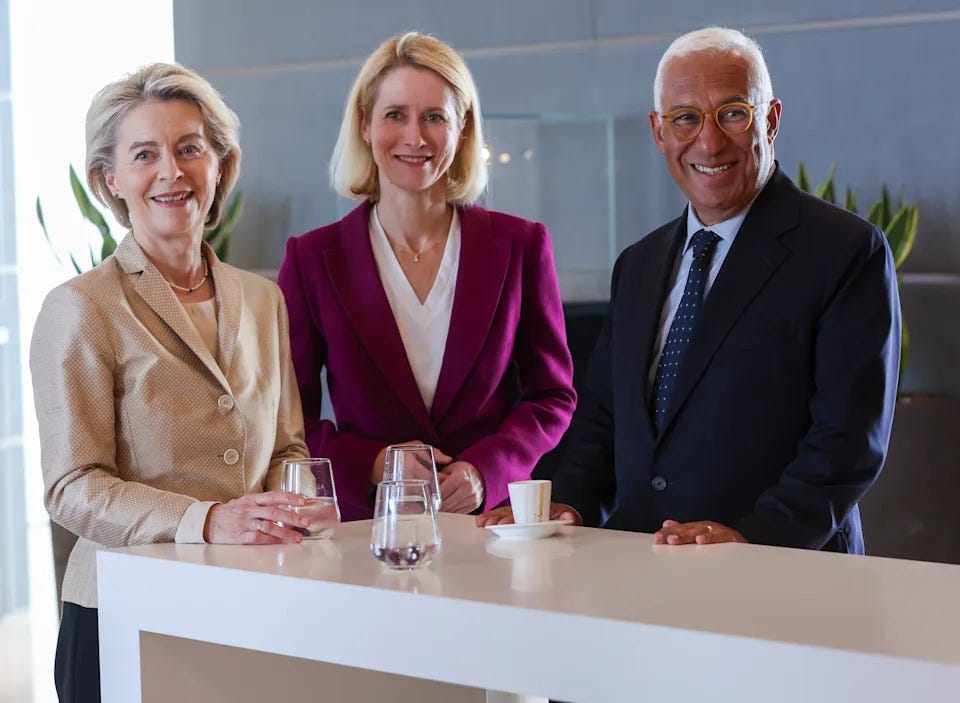
While the trajectory of EU diplomacy was a train wreck long before Kallas failed upward, few would argue that it hasn’t been a terrible, horrible, no good, very bad 14 months for the Union’s foreign affairs since she assumed her role. Incredibly, the EU now finds itself at loggerheads with essentially every major power in the world, drifting through the global game of geopolitics with no strategy, failing economies, deep resentment at home, and shaky access to crucial energy supplies from abroad.
And yet Kallas remains in her post.
In many ways, the entire Kallas affair is a sharp metaphor for the ongoing existence of the EU itself, which is the primary reason her continued presence on the political scene is of such interest to us. Surely, she and other failed leaders of Brussels’ bureaucracy, including EU Commission President Ursula von der Leyen herself, will soon bow to reality and exit stage left, with Kallas’ resignation being but the first of many dominoes to fall. Might US President Donald Trump’s Greenland gambit be the catalyst that collapses the entire edifice? A new energy crisis? Defeat in Ukraine? All three?
Let’s cross the Atlantic, take stock of the EU’s dismal relationships with the great powers, and ponder what likely comes next.