
Call of Duty
France, climate lawfare, and NGOs. What could go wrong?

“Every bad precedent originated as a justifiable measure.” – Sallust
On April 24, 2013, an eight-story commercial building near Dhaka, Bangladesh, collapsed. Buried among the rubble were thousands of the world’s lowest-paid garment workers, more than 1,100 of whom ultimately perished, making the incident one of the deadliest industrial accidents on record. The scale of the carnage made headlines around the world, and shocked consumers were given rare insight into the real reasons their clothes were so affordable in the modern age.
More than enough blame was found to go around in a subsequent 400-page report: The building had been erected on a filled-in pond, undermining its foundations. Originally designed and permitted for fewer stories and light commercial use, extra floors were illegally added and stuffed with heavy machinery, huge loads of fabric, and an army of laborers. Investigators found deadly construction flaws—substandard concrete with too much sand, inadequate reinforcing steel, thinly cast slabs—all but assuring the building’s ultimate collapse.
When the building lost power on that fateful day, a regular occurrence in the developing country, large rooftop diesel generators switched on, sending strong vibrations through the already compromised structure. The failure of a critical column near those generators triggered a cascading series of floor collapses, the combined weight of each overwhelming those below with shocking speed.
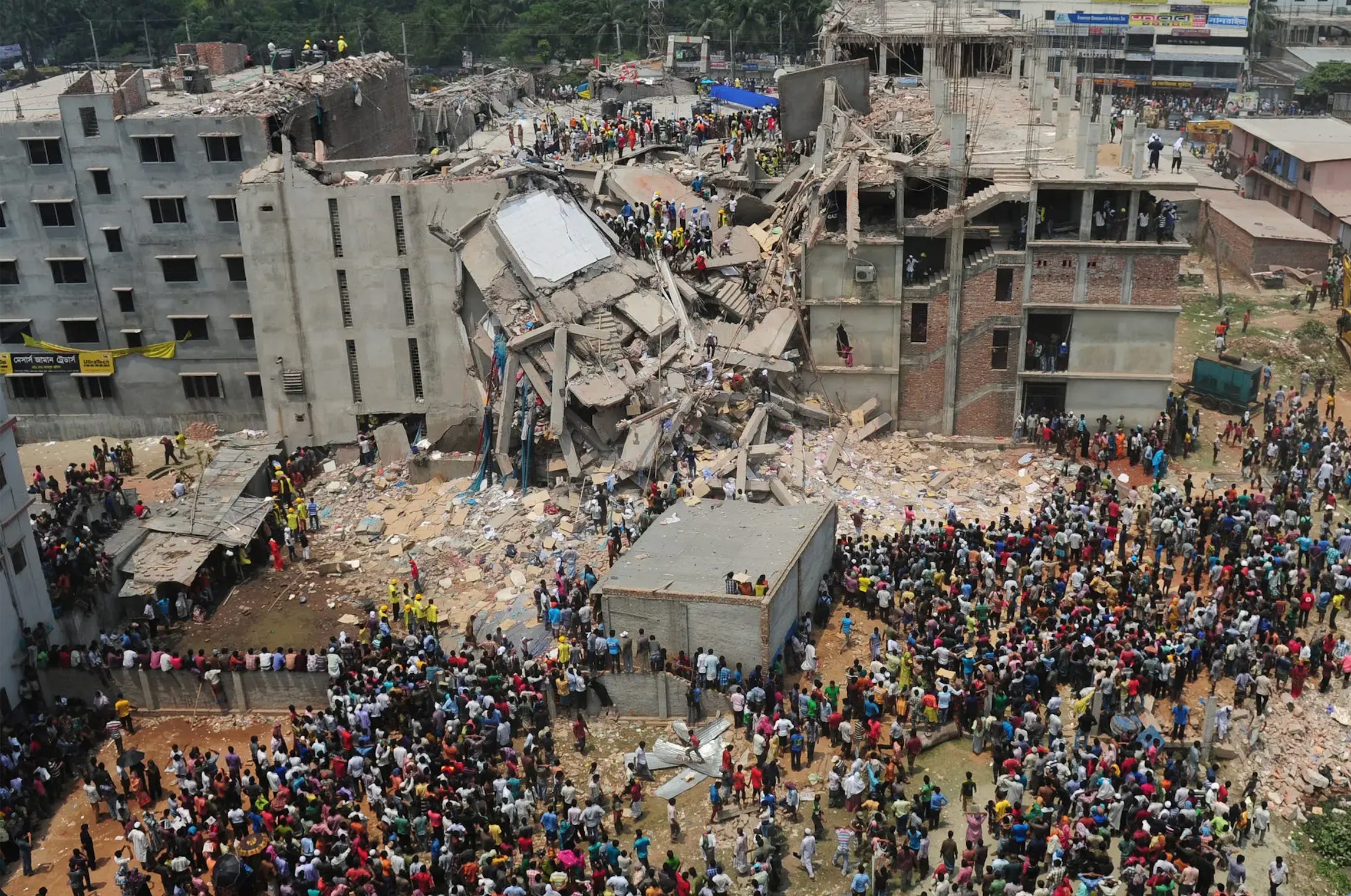
Clothing articles found among the debris bearing dozens of household brands named and shamed those ultimately responsible for the catastrophe, including many famous French designers.
There is a direct line between this tragedy and the duty of vigilance law (DVL) passed in France in 2017, which requires large French companies to establish, publish, and implement plans to identify and prevent serious human-rights, health and safety, and environmental risks in their operations and supply chains. Critically, the law extends big-company responsibility to subsidiaries, subcontractors, and suppliers, with potential civil liability if they fail to meet those obligations. The law is a clear precursor for the European Union’s Corporate Sustainability Due Diligence Directive (CSDDD).
Unlike the CSDDD, which specifically calls out the need for large companies to address climate change in their risk-management documents, the French DVL is comparatively silent on the issue. Do “environmental risks” include accelerating climate change? If so, what practical steps are large French companies supposed to take? Critics have described the DVL as impractically vague in general, and a wide variance in corporate efforts to avoid running afoul of the legislation has frustrated practically all the stakeholders involved.
This very vagueness is now on trial in a Paris courtroom. After years of legal wrangling, one of the most important climate lawfare cases is finally reaching its apex:
“In the city where the Paris climate agreement was created, French oil major TotalEnergies is facing trial in a landmark civil climate case that aims to compel the company to curb its oil and gas production and emissions in line with the global accord’s 1.5 degrees Celsius long-term temperature limit.
The Paris Judicial Court is holding a hearing on the merits, essentially a trial, Thursday and Friday in the case brought by French nonprofit groups and France’s capital city. Judges are examining, for the first time in the country’s history, whether a multinational oil and gas company can be legally required to reduce its fossil fuel production in line with climate objectives, according to a press release from the plaintiffs.”
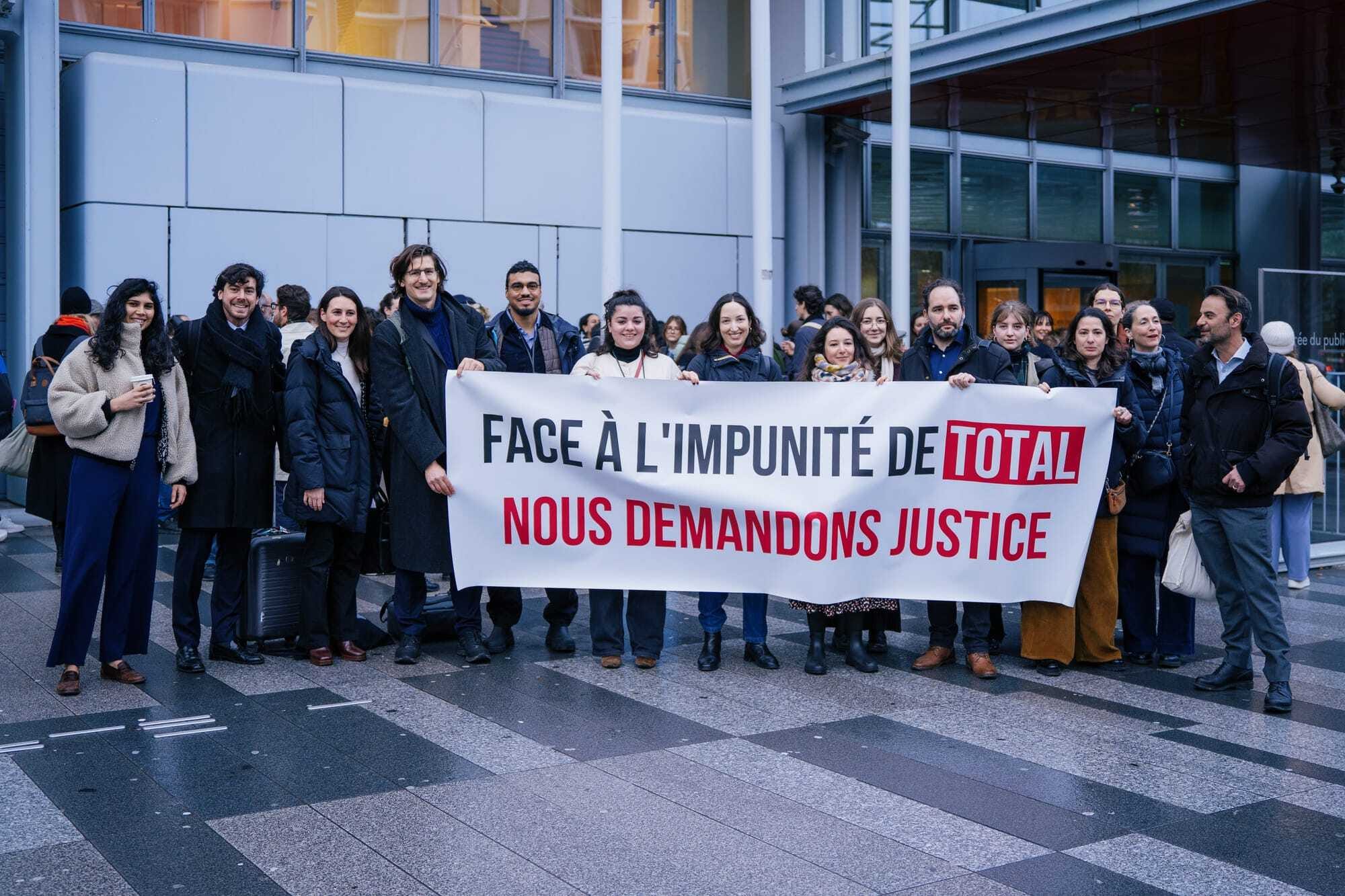
The stakes involved could not be higher. Among the core issues: the extent to which national climate commitments can be forced upon companies domiciled in those nations, the lengths to which courts can order multinational companies to go in order to meet those commitments, and even France’s future as a significant player in the world of hydrocarbon development. Let’s hop on a plane, cross the Atlantic, and check in on the most important court case you’ve probably never heard of.