

“Between stimulus and response, there is a space where we choose our response.” – Stephen Covey
Just hours before the war in Iran kicked off, North Dakota District Court Judge James D. Gion issued a final judgment ordering several Greenpeace entities to pay $345 million to Energy Transfer to compensate for their destructive role in the 2016–2017 Dakota Access Pipeline (DAPL) protests.
Among those ordered to pay was Greenpeace USA—and because the judgment is larger than its yearly revenues and far exceeds its readily available assets, the case is understandably considered existential for that organization.
For a US state with a population just under 800,000, North Dakota punches well above its weight in global energy markets. Representing one of the Union’s more conservative states, local leaders made the political decision to aggressively develop the Bakken Formation, an attractive shale play that helped push oil production to over 1 million barrels per day (bpd) in just a few years. Local politics also made it a particularly poor place for Greenpeace and its allies to pull the stunts they did a decade ago—the DAPL project got built despite their protests, and now they are effectively insolvent.
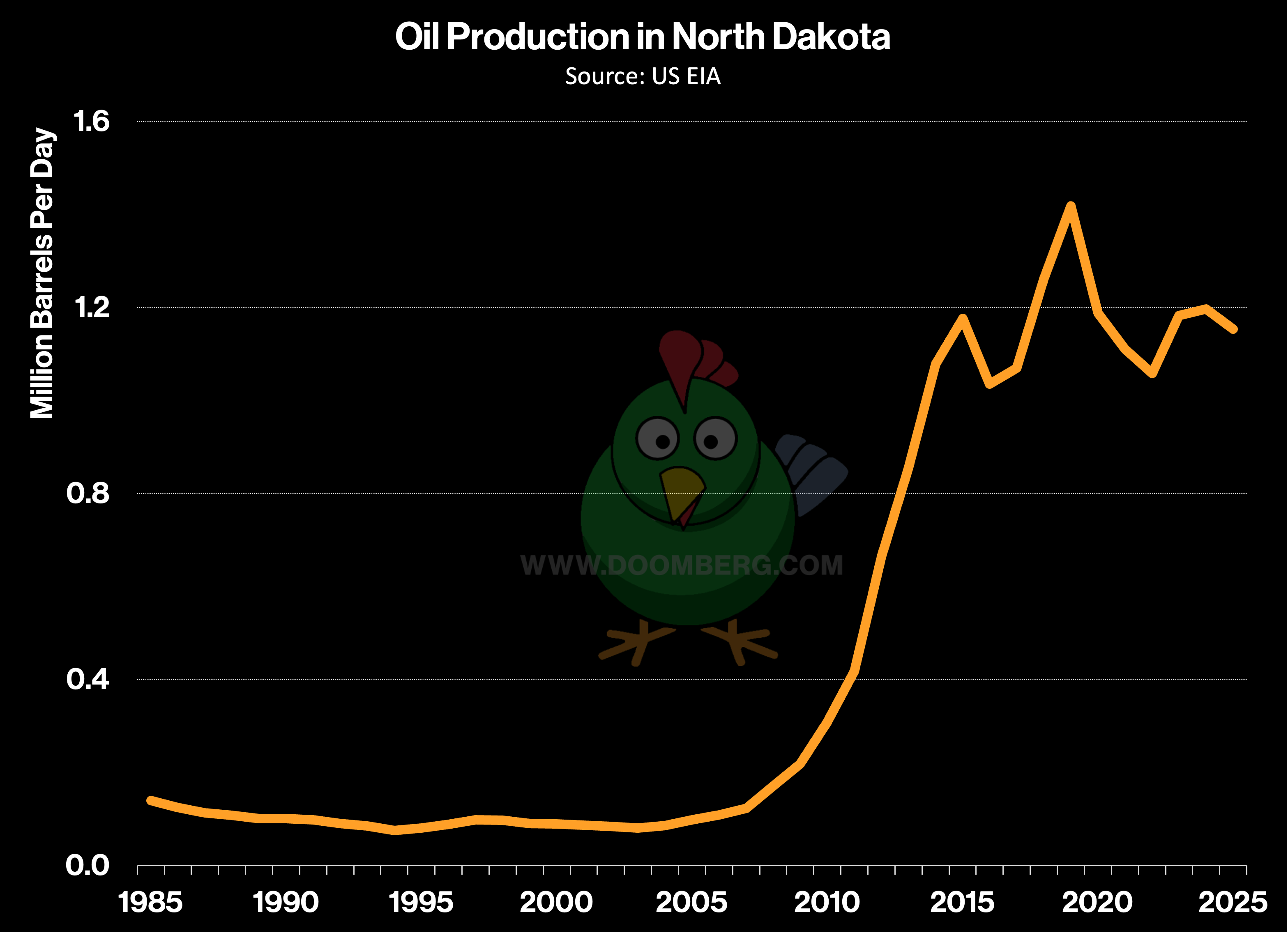
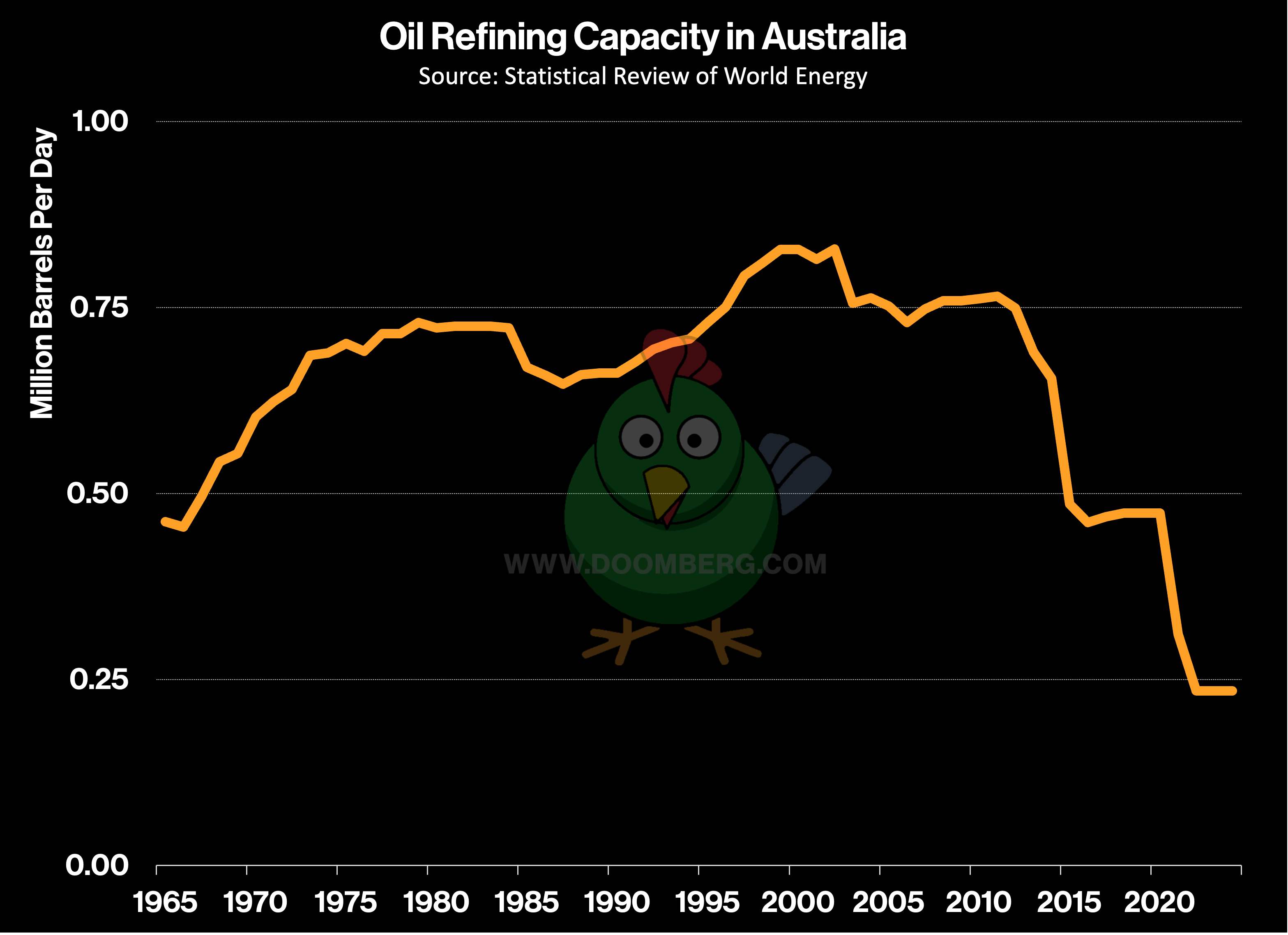
Halfway around the world and on the opposite end of the hydrocarbon political spectrum sits Australia, whose population of over 28 million could have the entirety of its oil demand met by North Dakota’s production. The Land Down Under consumes roughly 1.1 million bpd of oil, but only meets about a third of that with domestic production. Worse still, Australia is no longer a major oil refiner, with nameplate capacity to produce fuels like gasoline, diesel, and jet fuel able to cover only a fifth of its needs. It’s not that the country can’t operate refineries; it simply chose to stop building them and allowed existing facilities to wither into obsolescence. Greenpeace Australia Pacific surely celebrated those decisions.
Iran’s closure of the Strait of Hormuz has laid bare the folly of Australia’s energy stance, and the country barrels towards shortages and catastrophe. Although hardly to blame for the crisis, current Prime Minister Anthony Albanese is in the unfortunate position of having to deal with it. There are few good options available to him, and several bad ones. Recently, he bowed to political pressure and made a decision that will only make matters worse:
“Australian Prime Minister Anthony Albanese said on Monday the government would halve the excise on fuel and diesel and remove the heavy road user charge for three months to help households cope with a surge in costs driven by the Iran war.
Halving the tax would reduce the cost of fuel by 26.3 Australian cents per litre, Albanese said.”
As good as such gestures might feel, cheaper fuel will boost demand and make it more difficult to allocate limited supplies to the parts of the economy that need them most. Given their critical roles at the front end of Australia’s economy, farmers and long-haul truckers would seem to need priority access to diesel, for example, but the frenzy of crisis can make rational decision-making all but impossible.
The world might be in the early stages of what will become the most significant energy shock in modern times, but that hasn’t stopped policy advocates from aggressively pre-positioning for what comes after the crisis abates. Will the coming shortages be the death knell of the hydrocarbon era and herald an acceleration of the so-called green energy transition? Or will the disastrous consequences of flouting basic physics finally convince the pro-renewables crowd that it’s time for a serious rethink? For clues to where things are headed, the twin stories of Australia and North Dakota will almost certainly be instructive. Let’s find out why.