
Demand Push
Is a catastrophic shortage of US natural gas really on the horizon?

“Most things I worry about never happen anyway.” – Tom Petty
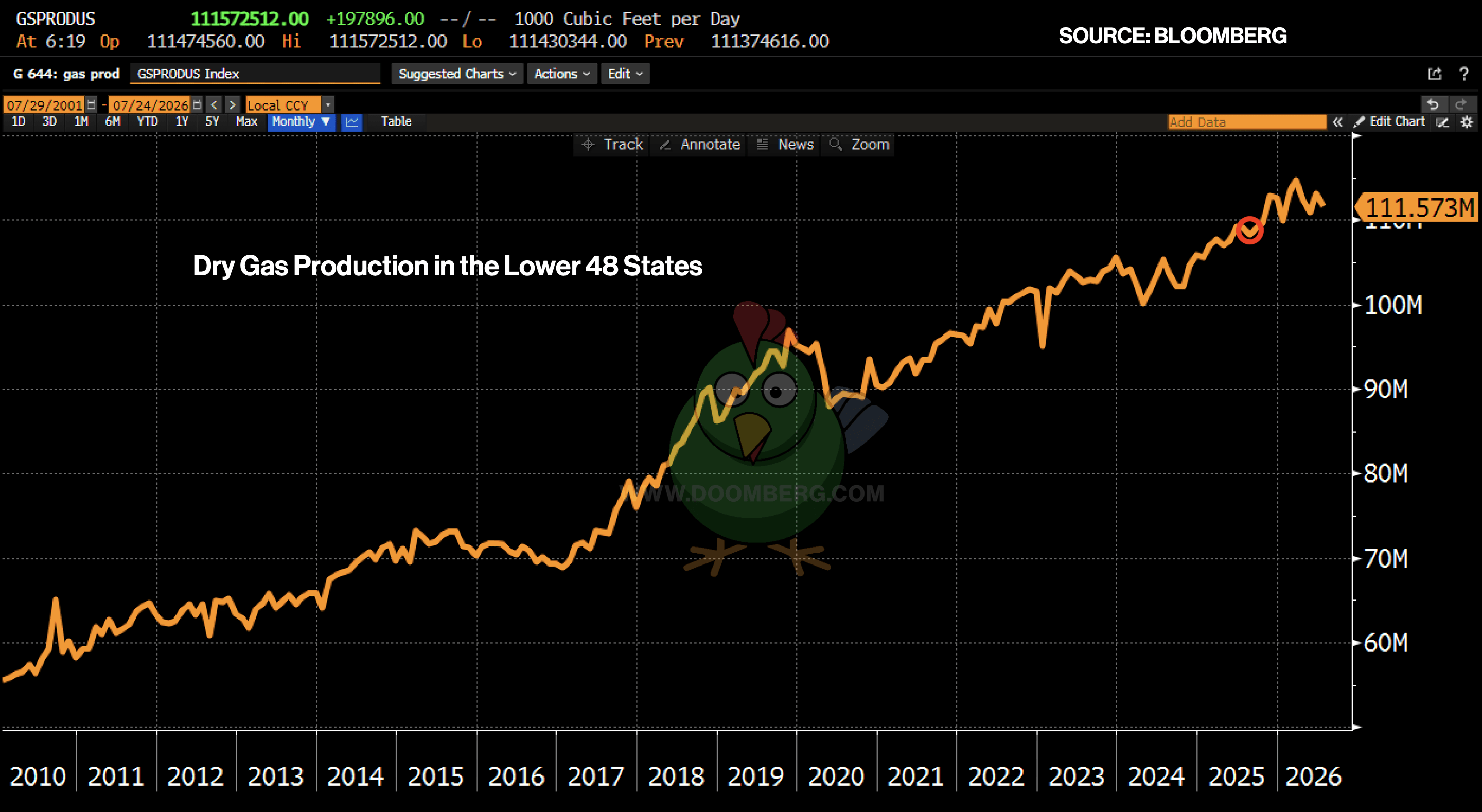
For as long as US shale gas has been a thing, energy pessimists have feared that the country will soon run out, perpetually predicting a supply cliff just around the next bend in the pipeline. To us, the historic and seemingly unending flow of new gas brought to market in the face of rock-bottom prices argues otherwise. If the US can more than double its domestic gas production in just over 15 years in exchange for next to nothing, imagine what the industry could deliver for slightly more than next to nothing.
When total US natural gas production in the lower 48 states smashed through 70, 80, 90, and 100 billion cubic feet per day (bcf/d), the goalposts were merely moved outward, only for the industry to reward once again those who had bet the over, at least intellectually. It feels like it’s been about 5 bcf/d since we last addressed our expectations for further growth:
Against this backdrop, our skeptical instincts went on elevated alert when many of you forwarded a podcast appearance by Matthew Smith, founder and CIO of Chronometer Partners, on Patrick O’Shaughnessy’s popular show, Invest Like the Best. O’Shaughnessy’s promotional tweet carried a distinctly seen-this-movie-before feel:
“Matthew Smith has spent the last 18 months modeling every well, pipeline, storage facility, and power plant in the American natural gas system. His conclusion is that the US is heading toward a natural gas shortage with no precedent, beginning in 2028. By 2030, he believes we could exhaust our working natural gas storage entirely. The fuel everyone in AI is counting on, and that everyone assumes is abundant, is not there.”
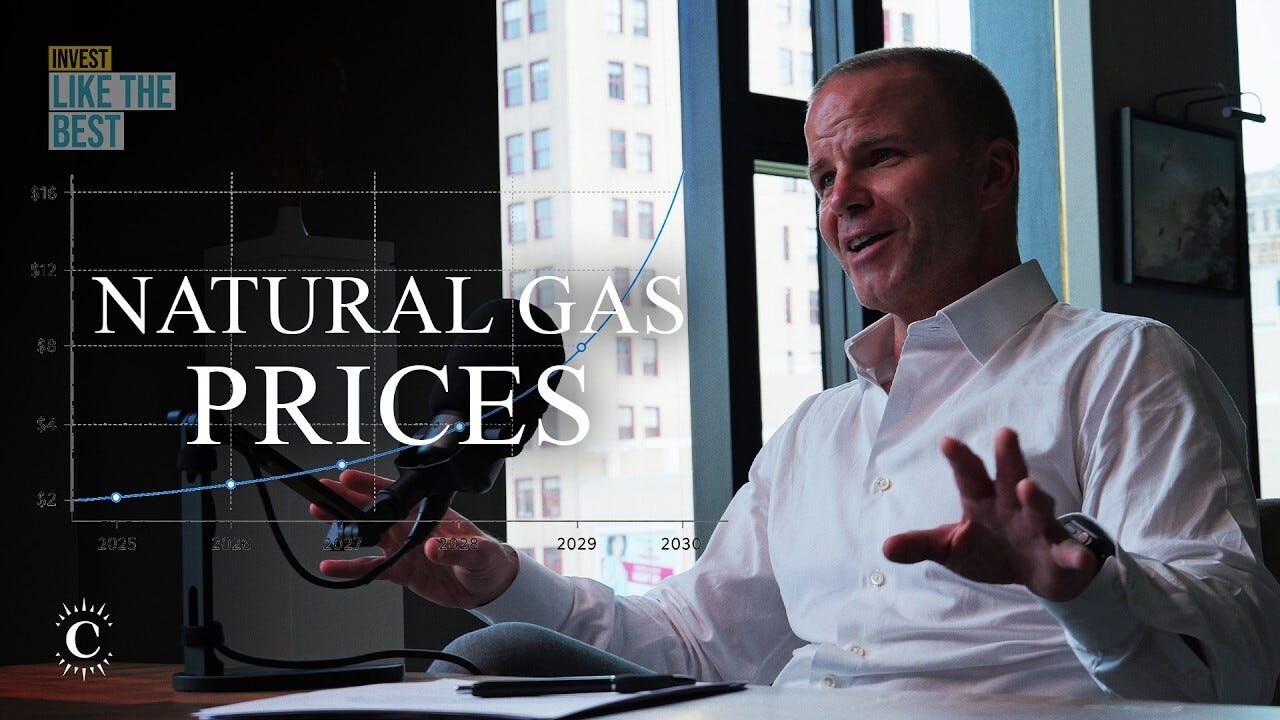
Having been a guest on many a podcast ourselves, we know that once a recording is in the can, how it is marketed by the host is largely beyond one’s control. Always interested in understanding opposing views, we gave the show a full listen and read Smith’s June letter laying out his thesis that, while natural gas production in the US is far from exhaustion, fast-growing demand will nonetheless create a high-price crisis.
Surprisingly, we found much to agree with and only a few points worthy of skepticism—albeit important ones. Let’s summarize Smith’s thesis and evaluate his big predictions.