
Endangered Specious
Myths, ghosts, and other oil things that go bump in the night.

“I’m a nut case, but that is what I believe.” – Mike Tyson
In the heady days between US President Donald Trump’s reelection and his second inauguration, headlines frothed with brouhaha over his cabinet nominations. While many nominees landed under the media microscope for reasons fair and foul, one person sailed through the confirmation process with ease: current Secretary of Energy Christopher Wright, the most qualified member to have ever occupied their appointed seat. (The basis for our ringing endorsement can be found in our aptly titled article from November of 2024, “In Praise of Chris Wright.”)
Beyond the lasting impact of Wright’s policies, the wisdom of Trump’s choice has been made clear during the various energy emergencies provoked by the chaotic first 20 months of the 47th presidency. While we suspect he grimaced at the way former Venezuelan President Nicolás Maduro was snatched from office, Wright has nonetheless quietly led a surprisingly swift revitalization of that country’s all-important oil industry, no doubt leveraging his formidable industry connections for the task.
To be sure, there have been challenges, and the story’s ending is yet to be written—challenges that include growing questions about how the proceeds from a revitalized energy sector will be disbursed. But the early results are remarkable. In July, for the third straight month, Venezuelan oil exports surpassed 1 million barrels per day, up from half that threshold as recently as December.
A far more vexing challenge was handed to Wright with Trump’s catastrophic decision to launch a war against Iran, precipitating the largest disruption to global energy markets in a generation. Tasked with helping the administration manage the resulting oil shock, Wright—like his predecessor under President Joe Biden, former Secretary of Energy Jennifer Granholm—turned to the bounty of barrels buried in the US Strategic Petroleum Reserve (SPR).
Unlike Granholm, however, Wright did not outright liquidate the nation’s insurance policy. Instead, he implemented a scaled-up version of an oil exchange program, in which molecular loans will be repaid in molecules, plus interest—also in the form of molecules. With no cash changing hands, and thus no need for congressional approval, Wright is actually refilling the SPR in what amounts to a physical calendar spread:
“Companies borrowing the oil are required to return the original volumes, with premiums of up to 24% in the form of extra oil. The department says that system will help stabilize markets at no cost to US taxpayers. Energy Secretary Chris Wright has said about 35 to 40 million barrels of extra oil will be returned this year and next in the form of premiums.”
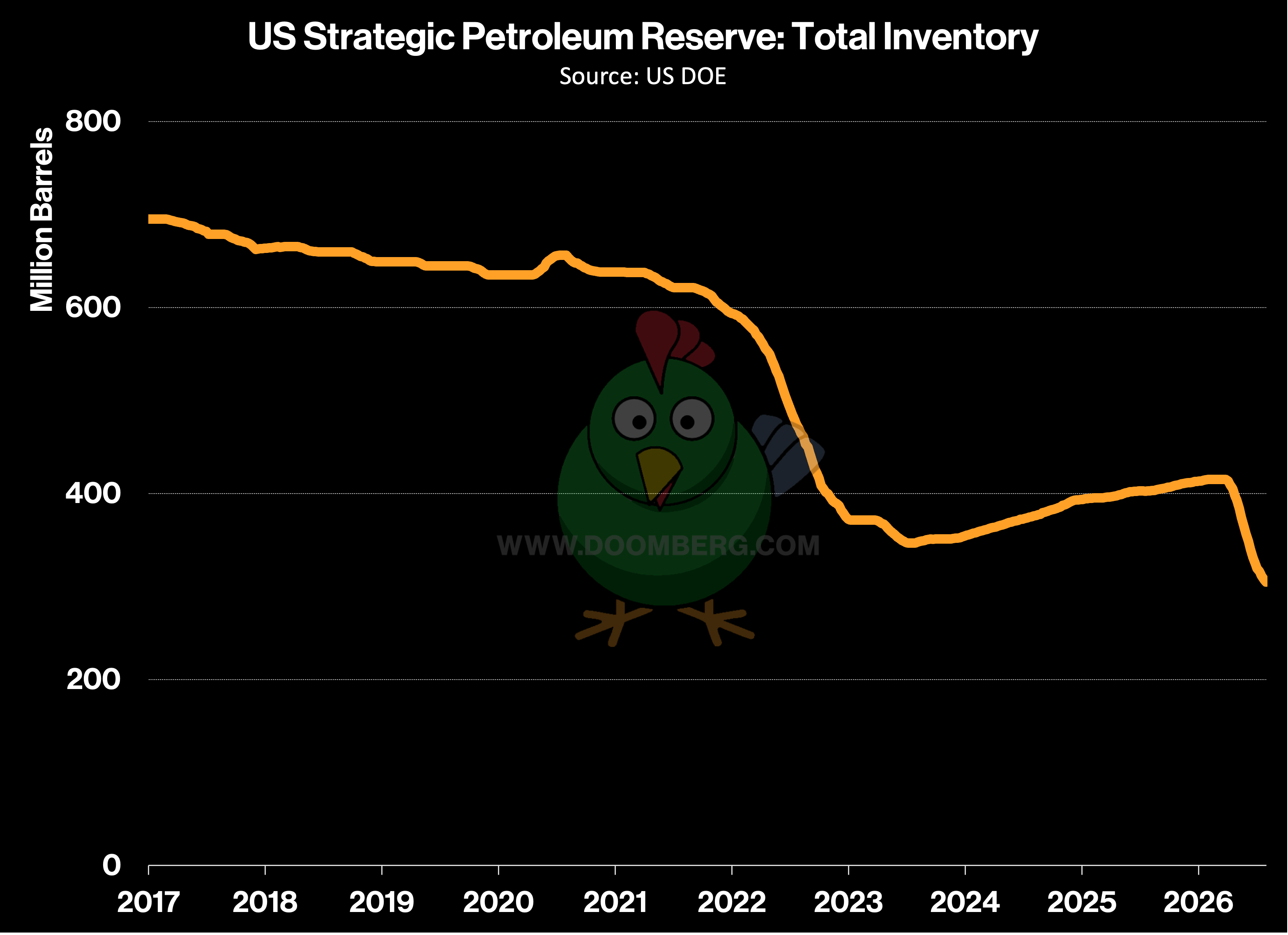
The shrewdness and prudence of this move seems beyond the skill of a surprisingly large number of oil commentators parading as experts on social media and television. To hear it from them, not only is the SPR nearing its operational bottom, but the US economy will all but collapse once this mythical level is reached. Perversely, such a breakdown would allow this cohort’s diehard predictions to finally materialize, making it an eventuality they appear to embrace, not lament or even hope can be prevented.
This is but one of many specious concepts that have reached escape velocity in the Twitterverse, each more void of logic than the next, many of them propagated by those who should know better. Alongside the SPR fear campaign sits a failed understanding of the real reasons prices at the pump are rising; a wildly misunderstood relationship between US and Canadian oil production; and a related disconnect when it comes to the capabilities and needs of the US refining colossus. Let’s dispel all four with a dose of straightforward, fact-based analysis.