
Fit to Print
One news event, many spins: A global propaganda tour.

“It is the merit of a general to impart good news and to conceal the truth.” – Sophocles
In the hours after war broke out in Ukraine in February of 2022, a two-minute video depicting a series of violent explosions went viral on social media. Billed as “live footage” of the new conflict, the clip was viewed by millions worldwide. Within the first day of hostilities, an 8-hour continuous loop of the material was seen nearly half a million times on Facebook alone—testimony to the compelling nature of the video and the broad hunger for updated information about what would become the largest conflict in Europe since World War II.
As Reuters quickly confirmed, most of the video had nothing to do with Ukraine at all, but instead consisted of a series of unrelated explosions. It has since been recycled to allegedly depict Israeli bombing of Gaza, Iranian strikes on Israel, and proof of other fresh atrocities around the world. Such is the nature of modern social media, where the spread of blatantly false or misleading information has been made all the simpler by the proliferation of artificial intelligence (AI) technology.
While it would be easy to dismiss this as a problem confined to edge cases on TikTok or Instagram, an embodiment of the same issue is ever-present in contemporary legacy media, where even “straight news” reporting can generate wildly different tellings of the same event. Lies of emphasis and omission are common, making even literally true statements functionally deceptive. This is especially prevalent when one broadens from domestic to international news outlets, where geopolitical intrigue provides an additional motive to shape narratives with a purpose.
As analysts, this is an issue we confront every time we take pen to paper, and the more propaganda we read, the better we get at recognizing it as such. Although identifying core truths is always challenging from a distance, one useful technique we use—and have mentioned during several podcast appearances—is to look at how the same event is covered by various international outlets. To the uninitiated, performing this simple exercise can be quite eye-opening and will likely forever alter how you subsequently consume the news.
At the suggestion of a helpful subscriber, we dedicate this missive to a test case using a recent headline-grabbing incident. We turn to The New York Times for a brief summary of something important that occurred last week:
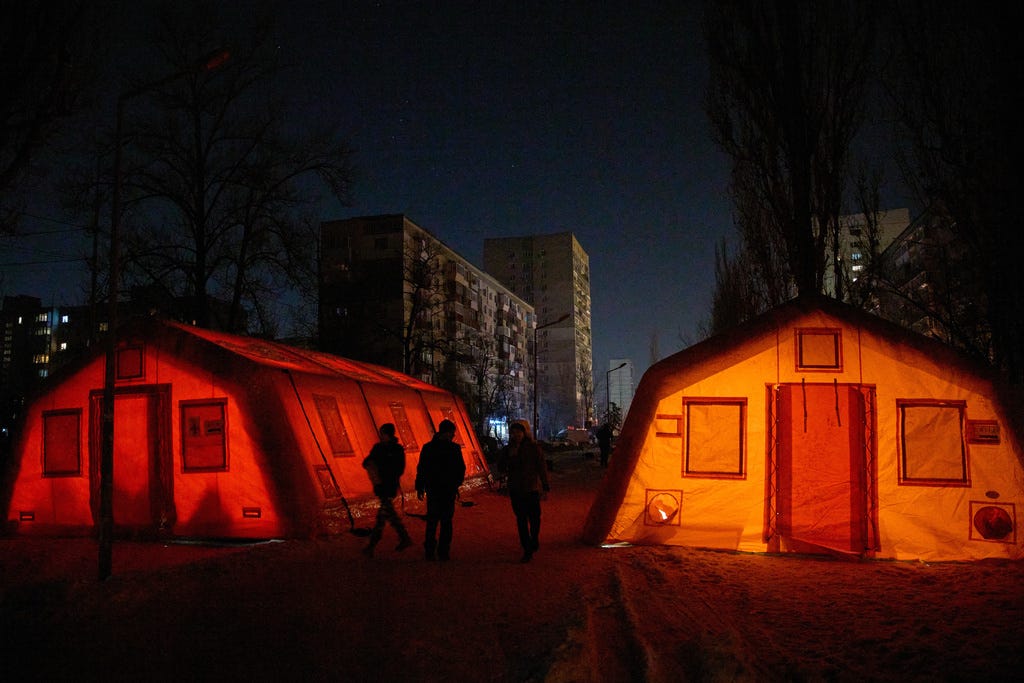
“President Trump said on Thursday that the Kremlin had agreed to a temporary pause in its missile attacks on Kyiv amid the fierce cold in the Ukrainian capital, a shift that, if true, would represent the latest sign that Ukraine-Russia peace talks are gaining momentum.
The Kremlin confirmed the pause on Friday morning, saying that Mr. Trump had made the request to President Vladimir V. Putin of Russia for a weeklong pause on strikes on Kyiv that would last until Feb. 1. The Kremlin spokesman, Dmitri S. Peskov, declined to answer questions about what exactly would be off limits as a result of the pause, but said the goal was the ‘creation of favorable conditions for holding talks.’
President Volodymyr Zelensky of Ukraine, speaking a few hours after Mr. Trump, thanked the United States for its efforts to halt Russian strikes on Ukrainian energy infrastructure but stopped short of declaring that there would be a reprieve.”
The specifics of what happened seem simple enough: Trump lobbied Putin to temporarily cease attacks on Ukraine’s energy grid, and the Kremlin obliged. However, both the specifics of what allegedly went down and the meaning ascribed to them depend heavily on which part of the globe you source your news from. What follows is a curated sampling of an incredibly diverse menu.