

“You may not be interested in strategy, but strategy is interested in you.” – Leon Trotsky
Stripped to its core, the game of chess combines calculation and psychology. Starting with the pieces as they lie on the board, a player mentally analyzes the current position, works through a series of candidate moves, and ponders the resulting options their opponent would face in each scenario. Depending on the complexity of the game, dozens of lines might be considered, and how likely an adversary is to find good countermoves is typically a prime consideration.
While a machine can use raw compute to always find the best path forward, humans are far from omnipotent, which makes appraisal of an opponent’s skill all the more critical. Are they likely to find the one obscure move that rescues the position? If they do, how much of their clock are they likely to burn searching for it, and what are the best responses? Having worked through as many scenarios as time constraints permit, you make a move. What your opponent does next is all that matters.
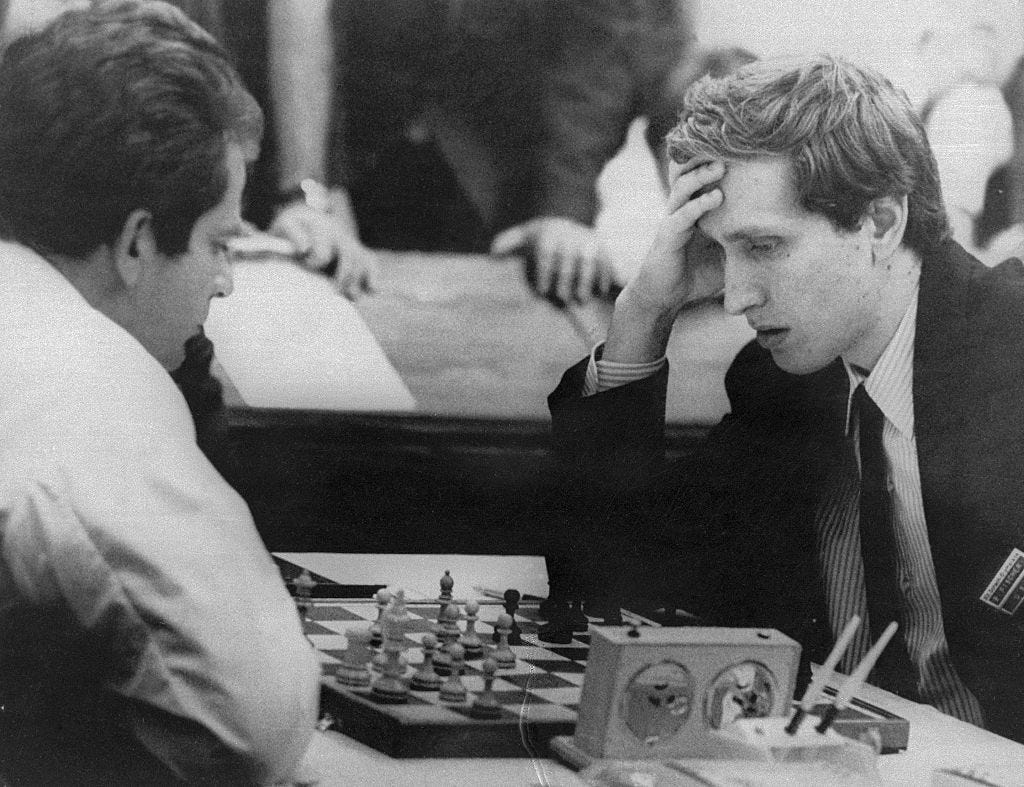
We’re not sure what game political leaders in Washington, London, and Brussels are playing as they navigate World War III, but nobody would confuse it with chess. On their board, opponents not only don’t matter, but how they might respond to a move seems a foreign thought, brushed aside as the stuff of so-called “panicans.”
For a crushing example, consider what could possibly have been going through the minds of European Union (EU) leaders when they decided to include 14 large Chinese businesses in the bloc’s 21st sanctions package against Russia, ostensibly for providing dual-use goods that feed Moscow’s war machine. It didn’t take long for Beijing to hit back where it hurts:
“China announced it will add export restrictions on 14 EU defense and technology companies after the EU added 14 Chinese businesses to its Russia sanctions lists. This marks Beijing’s most direct and forceful response yet to EU sanctions listings, which it denounced as ‘egregious.’ Recent studies estimate that up to 90 percent of sanctioned goods still reaching Russia transit through China.
Germany’s rapidly expanding defense company Rheinmetall is among 14 firms that Chinese exporters are now barred from supplying with dual-use goods — products that have both civilian and military applications — China’s Ministry of Commerce said Friday. The list also includes Czech truckmaker Tatra, Dutch naval engineering firm IHC Merwede, and several optics and laser companies.”
Amazingly, China’s utterly predictable response seems to have shocked those in Brussels, who must have assumed the world’s biggest and most powerful economy would beat a hasty retreat. It wouldn’t take much more than a passing familiarity with how Beijing operates to divine its countermove:
“This indicates a carefully planned strategy. Rather than aiming for immediate economic restrictions, Beijing selected firms involved in Europe’s dual-use technology and defense manufacturing sectors. The message is clear: If Chinese firms can be sanctioned for allegedly supporting another country’s military efforts, European companies in similar strategic areas should not expect to be immune from reciprocal actions.
The speed of China’s response is also noteworthy.
While sanctions diplomacy often drags on for weeks, Beijing acted in under a day. This shows not just political determination but also the growing effectiveness of China’s legal framework, including its Export Control Law and Anti-Foreign Sanctions Law, which now allows quick, rules-based responses.”
This is hardly an isolated event confined to the military-industrial sector. Given the central role energy has played in the ongoing global conflicts, we foresee that critical commodities are at risk of succumbing to similar fallacies of one-dimensional thinking, with potentially disastrous results. Let’s tour the combat zones and highlight a few telling examples.