
Geopolitical Mutagenesis
When attacks build resistance.

“Out of life’s school of war—what does not kill me makes me stronger.” – Friedrich Nietzsche
Few practitioners enjoy wrapping linguistic complexity around straightforward concepts more than biologists, which explains how Nietzsche’s 1888 truism on resilience came to be rebranded as “stress-induced mutagenesis” a century later. Among those who study living organisms and life processes, the term is applied to situations in which external stresses trigger an increase in mutation rate that boosts genetic diversity and can accelerate adaptation.
The phenomenon is especially evident in the field of oncology research. When doctors treat cancer with novel therapies, the treatments themselves place tumor cells under intense stress. In response, some cancer cells switch into a kind of “error-prone” mode in which they start making more genetic mistakes than usual. Most of those mistakes are useless, but a few can give cells the ability to survive the very drugs meant to kill them. Over time, this stress-driven trial-and-error process can leave behind a tougher, more drug-resistant cancer that is harder to treat, let alone cure.
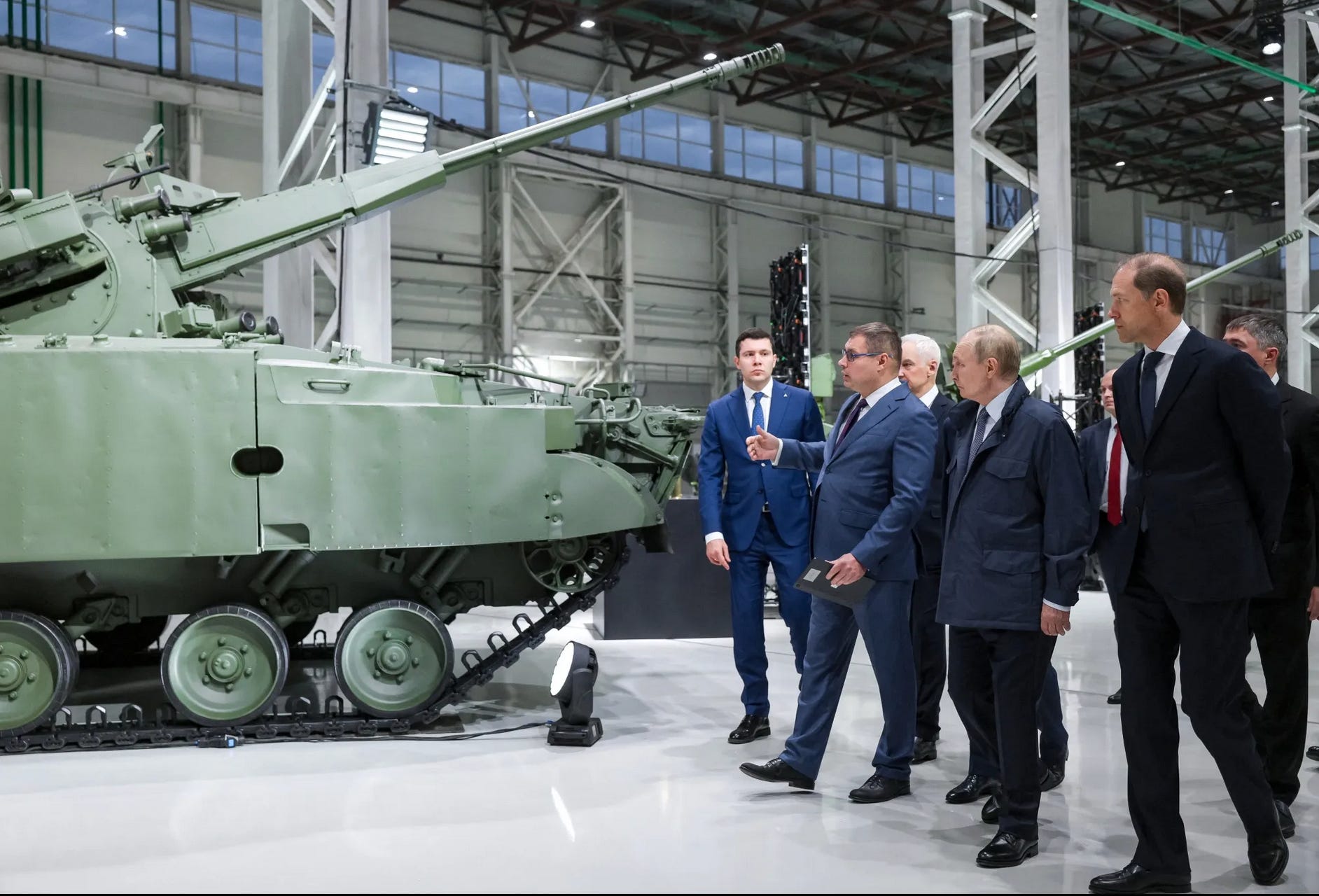
As Nietzsche astutely observed, this concept thrived in the theater of war long before it was discovered in the lab. Consider the impact of the sanctions war on the Russian economy after the conflict broke out in Ukraine. The avalanche of sanctions was historic, forcing Russian President Vladimir Putin to oversee the selection of “resistant” traits across nearly all aspects of Russia’s domestic economy by rapidly hacking together parallel imports, homegrown substitutes, and yuan-denominated finance to emerge as a stronger industrial power than before the war began.
The war with Iran can be modeled as a set of two competing attempts to impose sufficient stress to overwhelm mutagenic responses: (1) the longtime sanctions against Iran, which have forced an unexpected resiliency, and (2) the current oil blockade in the Strait of Hormuz, which will come to strengthen energy markets against future concentrated points of control. Each side is racing to adapt at a pace that dulls its opponent’s efforts. Which camp prevails will undoubtedly shape the next several decades of geopolitical evolution. Let’s contextualize the metaphor further in search of clues as to how this war will ultimately end.