
Grid Socialism
The EU’s plan to make electricity uniformly expensive for all.

“The more storage you have, the more stuff you accumulate.” – Alexis Stewart
While doomscrolling ZeroHedge early Friday morning—as one does—we learn that Finland’s foray into the world of wind energy isn’t going well. Having invested to the point that wind is now the country’s second-largest source of electricity, residents are grappling with reduced supply and skyrocketing prices, with many forced to burn wood just to stay warm. Wind generation has all but gone dormant during an epic cold snap, made worse by the decision to skimp on expensive in-blade heating technology that could have minimized ice formation.
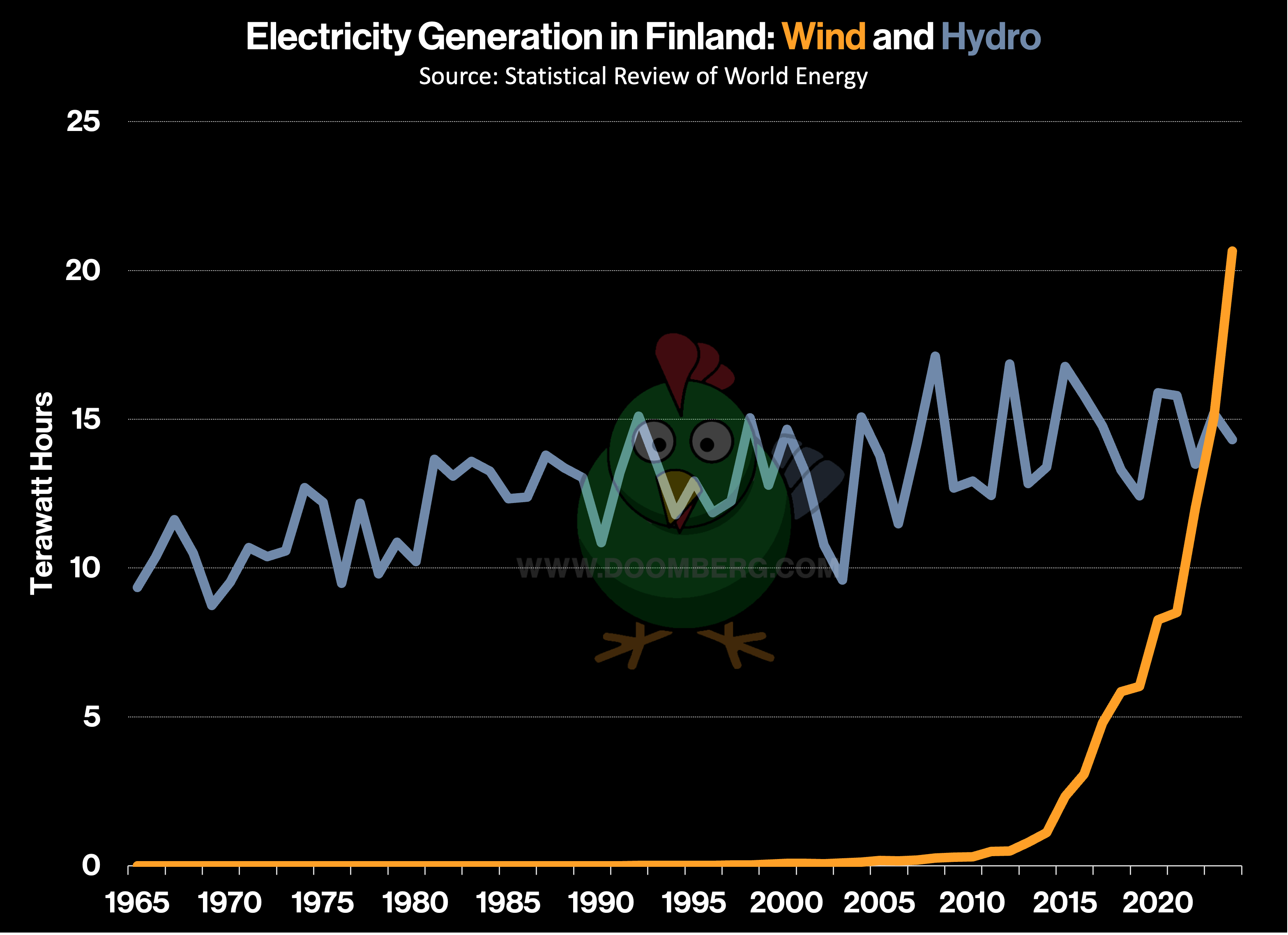
Even without looking, we guessed that intermittent sources of electricity in Finland must now exceed highly dispatchable ones—a predictable point of pain where stuff begins to break. Sure enough, a quick check of government data and the Statistical Review of World Energy reveals that the country sourced 39% of its power from nuclear reactors, 25% from wind, and 18% from hydroelectric facilities in 2024, and the rest from other sources and imports. Although nuclear is an excellent source of baseload power, it is not ideal for rapid load-following. With Finland systematically weaning itself off natural gas, its hydroelectric dams have been left to do the heavy lifting. See if you can spot the problem:
Another shortcoming is the slow pace at which Finland has been installing battery backup systems, not that a faster pace would have meant much. As of mid-2025, the country had just 0.25 gigawatts (GW) of grid batteries in operation, or about 1 gigawatt-hour (GWh). By our math, this is enough capacity to backstop grid demand for roughly six minutes.
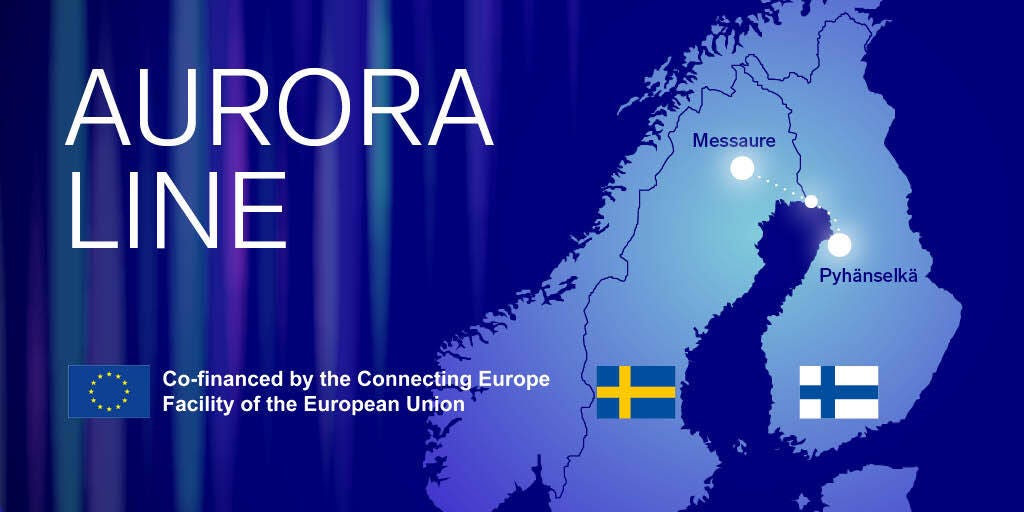
To avoid grid collapse, Finnish authorities implored citizens to rein in demand, a message that soaring day-ahead electricity prices drove home. Ultimately, imports from neighboring countries helped abate the crisis, with Sweden in particular coming through in the clutch. In November, the two countries celebrated the go-live of the new Aurora Line 400 kV interconnector between northern Sweden and Finland, a project that increased total cross-border capacity in both directions to about 2 GW.
The net effect of Finland’s wind-induced crisis was to raise prices for consumers in Sweden, of course, as excess supplies were used to equilibrate the two markets. A small price to pay for solidarity and the carbon cause, no doubt. Swedish power companies presumably did well, capturing gains on both sides of the border.
The Aurora Line is but one of a series of major infrastructure investments envisioned by leaders of the European Union (EU) that will harmonize electricity markets across its member states and other countries like Britain, Norway, Switzerland, Ukraine, Moldova, and Turkey. The Western Balkan nations and several North African neighbors will also be linked in, creating the world’s largest grid.
The key driving force is the need to solve for the intermittency that results from excess wind and solar generation capacity. Hundreds of billions of euros are being earmarked for the task. As the thinking goes, excess production of renewable energy in one area will help buffer shortages in another, smoothing out the worst lulls in any particular country.
That’s certainly one view of what is being built. Naturally, we have another…