

“Float like a butterfly, sting like a bee.” – Muhammad Ali
Early in the afternoon on March 24, 2021, some 200 fighters of the Al-Shabaab/Ansar al-Sunnah insurgency, a group aligned with Islamic State Mozambique, descended on Palma, a town in northern Mozambique’s Cabo Delgado province. Over the course of 12 days, more than 1,000 innocent civilians were ruthlessly slaughtered. We’ll spare the reader the gruesome details, but the dead included dozens of contractors supporting TotalEnergies’ nearby liquefied natural gas (LNG) construction project on the Afungi peninsula.
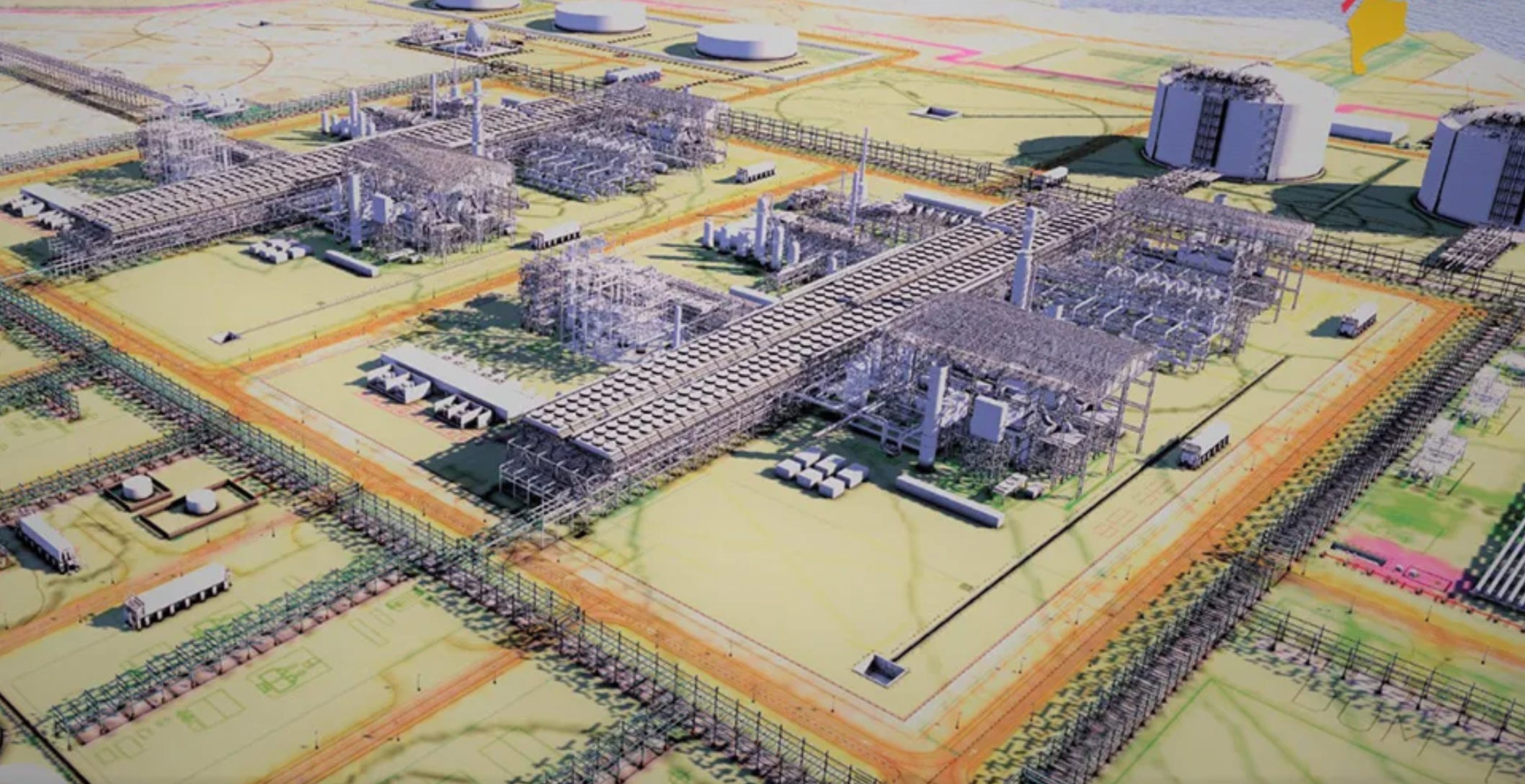
Conceived in 2010, the Mozambique LNG development is a case study in the difficulties of executing multi-billion-dollar energy projects in politically unstable parts of the world. TotalEnergies became the initiative’s operator only in 2019, after it partnered with Occidental to acquire Anadarko’s African assets. Less than two years later, it was forced to declare force majeure on the project, which is not anticipated to reach completion until 2029.
In stark contrast with this onshore LNG odyssey, the Italian major Eni’s floating LNG (FLNG) project, some 50 miles off of Mozambique’s shore, has proven a model of efficiency. Proposed in 2016, the Coral-Sul FLNG produced its first cargo in 2022, and today it liquefies approximately 0.5 billion cubic feet per day (bcf/d) of natural gas for sale in international markets. The vast and deep waters of the Indian Ocean provide an unparalleled security buffer against Islamic terrorism, as the marine-based capabilities of such groups are extremely limited. When its anticipated 25-year run is complete, the giant gas-plant-on-a-ship can be towed to a new location just about anywhere in the world and begin producing again.
As described in this expansive article published in the Financial Times on February 14, the concept of floating LNG production facilities has long been a goal of the oil and gas industry, but early challenges set the concept back for years and fed skepticism that it would ever make economic sense. Eni’s remarkable success in Mozambique, on the heels of similar projects in Malaysia, Cameroon, and Australia, makes clear that FLNG technology is ready for prime time, and a wave of new vessels is under construction. Among the high-profile plans is an Eni-led initiative to rapidly unlock natural gas production in Argentina’s massive Vaca Muerta shale deposit:
“Eni, YPF and XRG, the foundational project partners, today announced they have signed a binding Joint Development Agreement (JDA) to advance Argentina LNG. This large-scale integrated gas and liquefaction project will unlock Argentina’s Vaca Muerta shale basin and help position the country as a long-term global LNG supplier.
Argentina LNG is expected to deliver 12 million tons per annum (mtpa) [1.6 bcf/d] of LNG capacity, via two floating LNG facilities with a capacity of 6 mtpa [0.8 bcf/d] each. The project is designed to include production, processing, transportation, and LNG export infrastructure.”
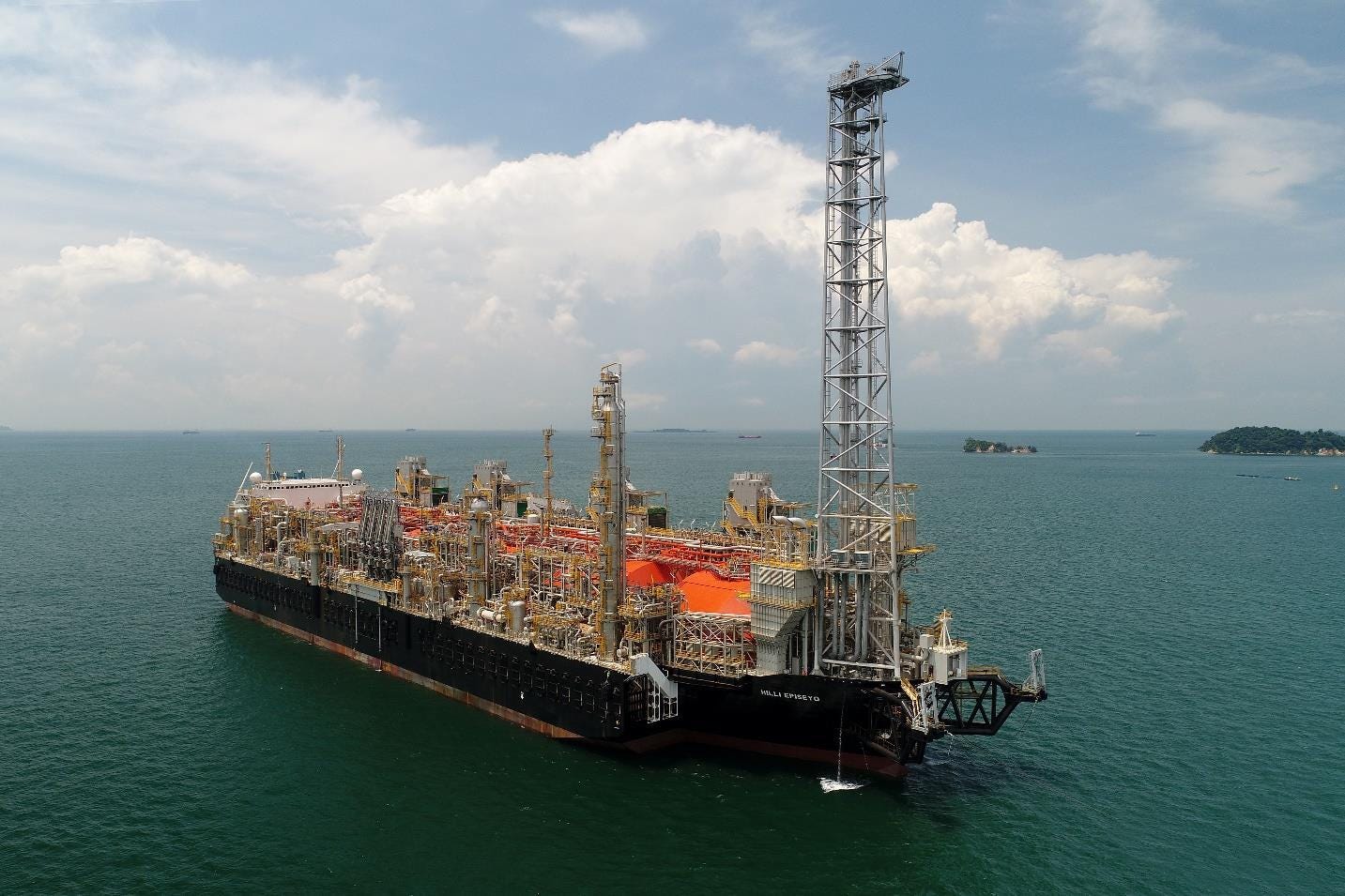
The project comes on the heels of Golar LNG’s decision to redeploy its Hilli Episeyo FLNG vessel from Cameroon to Argentina, where it is anticipated to begin production in late 2027.
The mainstreaming of FLNG technology represents a major development in hydrocarbon extraction technology—one that vastly expands resource viability worldwide and even pushes the phony concept of peak cheap oil further into the distant future than it already was, not that it was ever really on the horizon. If one plays forward the pace of development by a decade, the potential for change in global molecular flows is substantial. Let’s indulge in some informed speculation and ponder the consequences before they become common knowledge.