
Land of the Waning Sun
Hard numbers on the arc of China’s solar journey.

“Many a good newspaper story has been ruined by over verification.” – James Gordon Bennett
Three years ago, the Energy Institute inherited custodianship of the authoritative and widely cited Statistical Review of World Energy from its original publisher, the company formerly known as British Petroleum, an oil enterprise that never should have changed its name.
Judging by the recent press conference the Energy Institute held to accompany the release of the 2026 edition, the organization risks going the way of the International Energy Agency under Fatih Birol. Long on platitudes, short on neutrality, Institute leaders waxed profusely about renewable sources of electricity, the need to accelerate away from oil, gas, and coal, and how its data support all the right conclusions. Amazing progress is being made in the climate fight, but simultaneously, it is not nearly enough.
In short, the cure to what doesn’t ail us is more of what isn’t working.
We have not yet reached the data-manipulation phase of this otherwise predictable narrative arc, as evidenced by what the supporting documents actually confess. Although one now has to cough up an email address to get the thick spreadsheet of source data behind the slick summary presentation, it is still made available to the public for free. What do we learn? Hydrocarbons provided 86.24% of all global primary energy in 2025, down markedly from 86.65% the year prior. Won’t be long now!
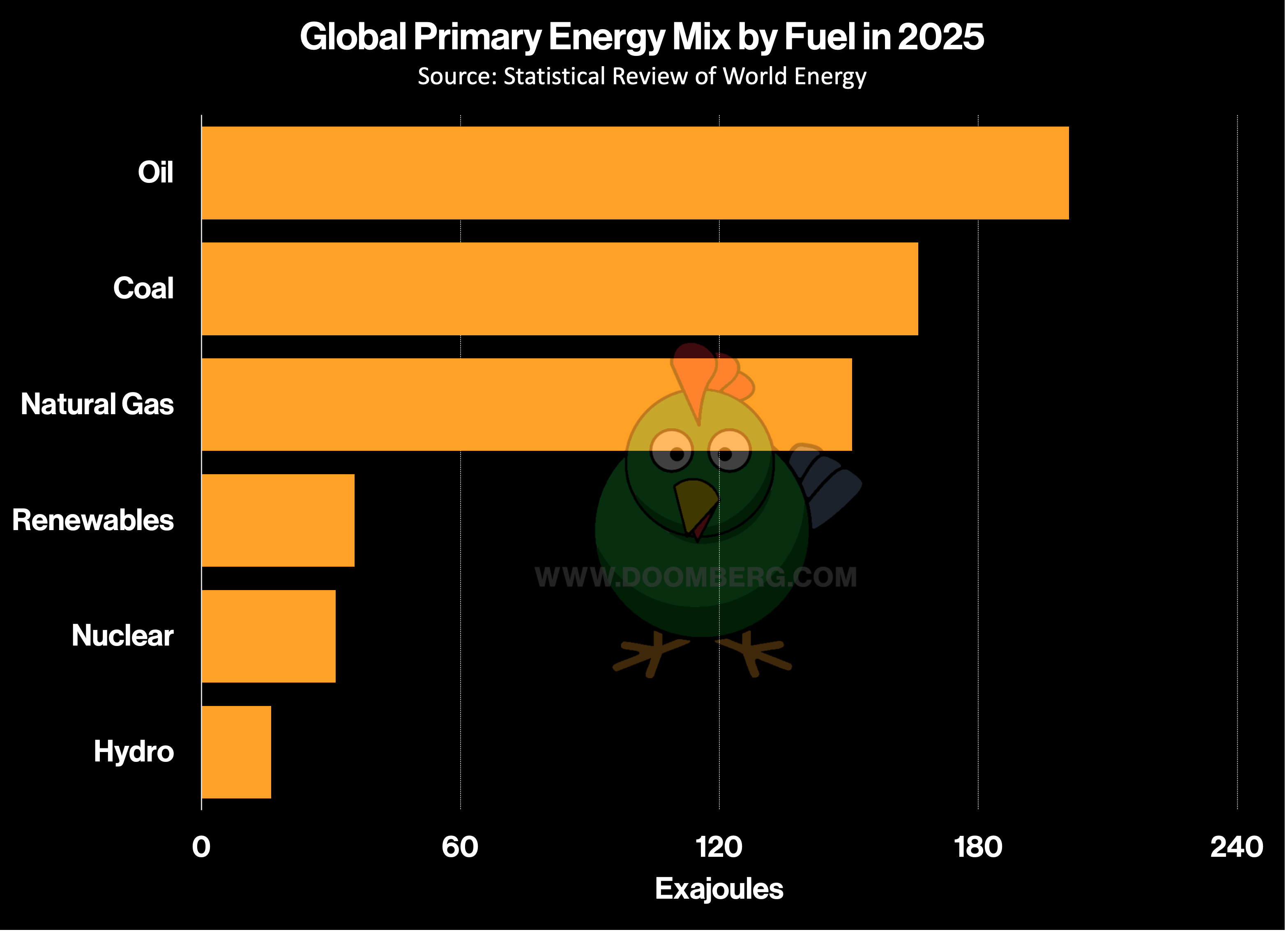
Despite this rounding error of so-called progress—and the inconvenient fact that each of the major hydrocarbons experienced record-setting consumption in 2025—all manner of statistical jujitsu was applied to convince the casual observer otherwise. Among the tired tricks of the trade were the casual conflation of electricity with total primary energy, an expansive grouping of “renewables” that includes burning wood, and divvying up the wedge of global energy growth to amplify the incremental contribution of wind and solar. That renewables accounted for a third of global primary energy growth in 2025 sounds impressive, until you consider that the latter grew by just over 1%.
Another clue that the Energy Institute is drifting away from neutrality is the unmistakable greenwashing of China’s energy policies. Objectively, Beijing is by far the world’s naughtiest carbon sinner, accounting for 56% of worldwide coal consumption and 31% of all carbon emissions last year. By way of comparison, the US checks in at just 5% and 13%, respectively. Yet a simple keyword search for “China” in the summary report reveals these three early gems, a mere sampling of what is sprinkled throughout the report:
“China is deploying renewables at unprecedented scale while stockpiling fossil fuels as insurance.”
“In absolute terms, the increase in US emissions was four times greater than that of China.”
“In China, coal consumption was flat year-on-year, as a result of slower demand for coking coal and a significant increase in solar generation.”
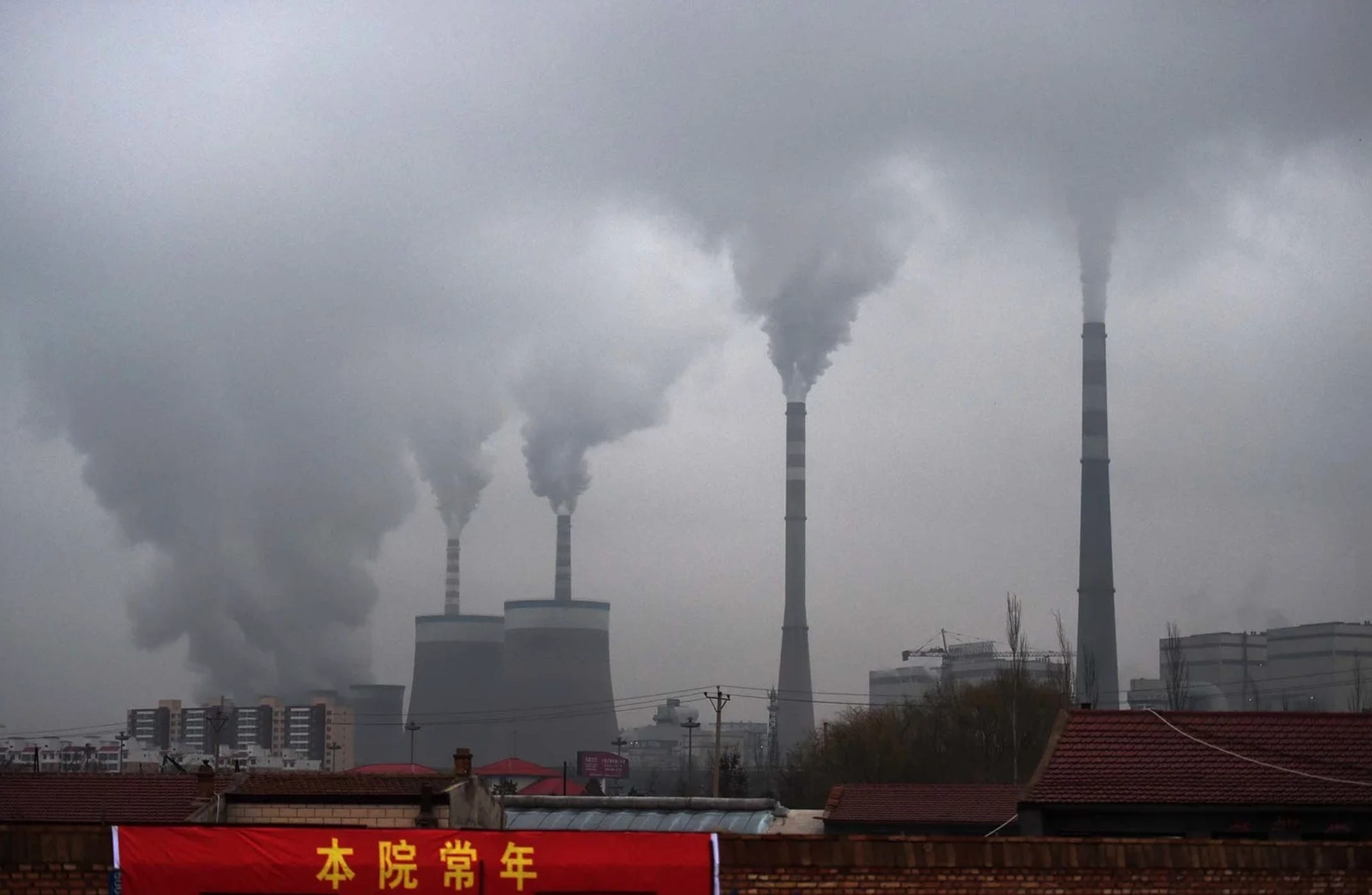
As the last of those gems signals, China’s solar industry is enshrined on a particularly prestigious pedestal by the Bishops of the Church of Carbon, for no sector in any country is so regularly bathed in unearned adoration. Yes, new solar installations in China set records in 2025, but—as we have been predicting in these pages for some time—that year will almost certainly set the metric’s high-water mark for many years to come, for reasons the data buried in the Review make abundantly clear. Let’s elucidate why, and write a story that few others are willing to type.