

“I am your father’s brother’s nephew’s cousin’s former roommate.” – Dark Helmet, Spaceballs
For a classic Wall Street grift to really hit pay dirt, a few critical ingredients must be present. First, the underlying business concept must be firmly lodged in the current investor zeitgeist. There is always at least one fad of the day. Today, it’s the artificial intelligence (AI) boom. Second, a good story is told about a futuristic, plausible-but-highly-unlikely technology breakthrough just over the horizon. Finally, access to liquid public markets should be well in hand to cash in on the mania—a reverse merger into a listed shell company, a merger into a special purpose acquisition company, or through a traditional initial public offering (IPO). After all, what good is a pump if there is no place to dump?
One of the main reasons these schemes keep fooling investors is that, on rare occasion, they actually work, and spectacularly so. Despite a long line of detractors, Amazon famously survived the dot-com crash and went on to become one of the most valuable companies in the world. Nvidia was thought to be wildly overvalued a thousand percent ago, when it was considered a bespoke gaming chip designer. Of course, Amazon and Nvidia were never pump and dumps, but they serve as exceptions that prove an important rule: sometimes, dreaming big really pays off.
Where does this new shiny thing fall on the spectrum?:
“To hear Silicon Valley tell it, artificial intelligence is outgrowing the planet that gave birth to it. Data centers will account for nearly half of US electricity demand growth between now and 2030, and their global power requirements could double by the end of this decade as companies train larger AI models. Local officials have begun to balk at approving new server farms that swallow land, strain power grids and gulp cooling water. Some tech executives now talk about putting servers in space as a way to escape those permitting fights.
Orbital data centers could run on practically unlimited solar energy without interruption from cloudy skies or nighttime darkness. If it is getting harder to keep building bigger server farms on Earth, the idea goes, maybe the solution is to loft some of the most power-hungry computing into space.”
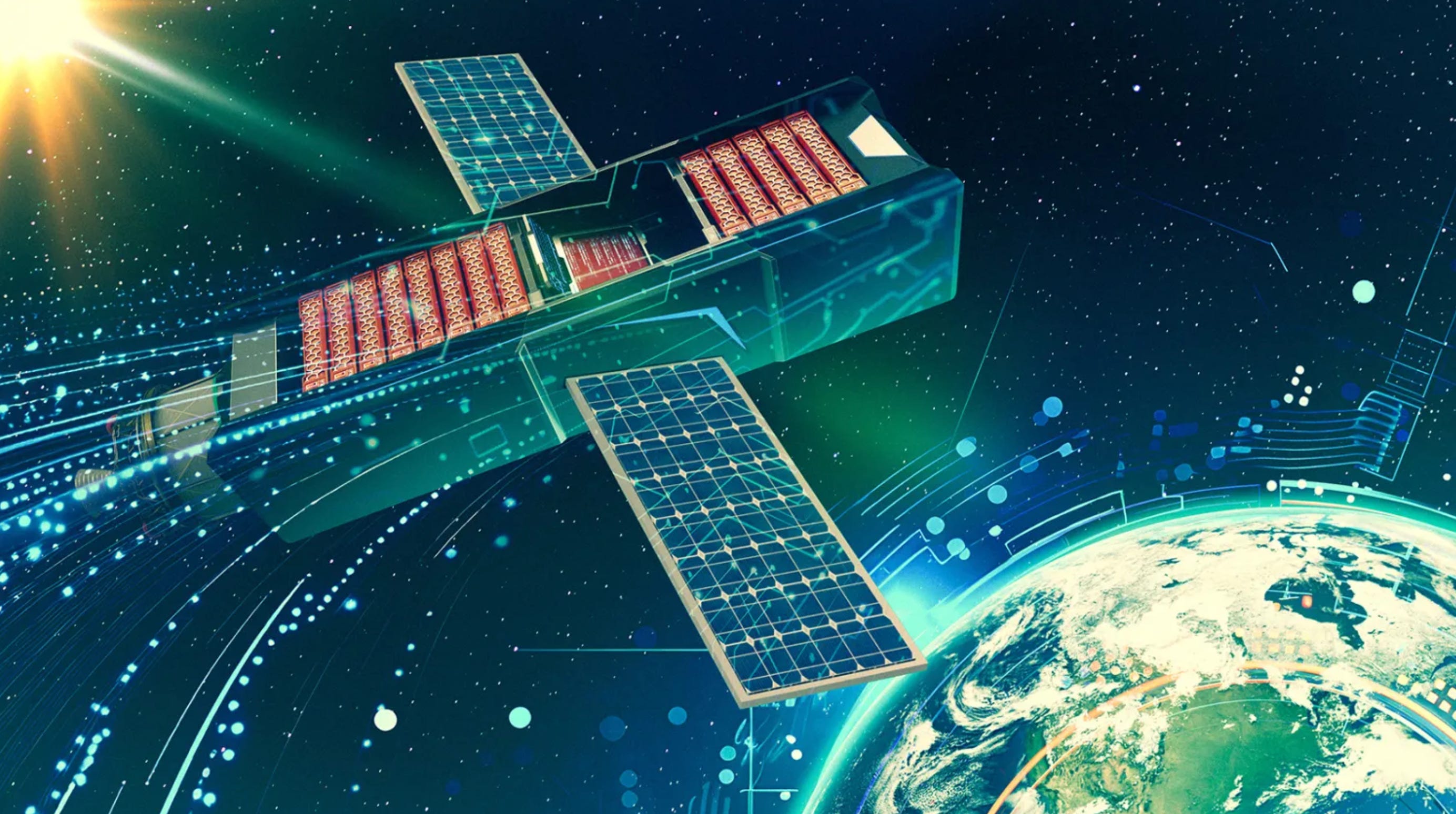
Our skeptical inclination led us to dismiss the recent boomlet of such stories as just another outlandish ploy to pilfer retail investors, especially with bankers lining up to take you-know-who’s privately held space company public in what will undoubtedly be the largest IPO of all time. However, we did pause when researchers at Google published a paper on the concept in November, part of what the company is calling Project Suncatcher. Here are a few opening lines from the paper’s abstract:
“If AI is a foundational general-purpose technology, we should anticipate that demand for AI compute -- and energy -- will continue to grow. The Sun is by far the largest energy source in our solar system, and thus it warrants consideration how future AI infrastructure could most efficiently tap into that power. This work explores a scalable compute system for machine learning in space, using fleets of satellites equipped with solar arrays, inter-satellite links using free-space optics, and Google tensor processing unit (TPU) accelerator chips. To facilitate high-bandwidth, low-latency inter-satellite communication, the satellites would be flown in close proximity. We illustrate the basic approach to formation flight via an 81-satellite cluster of 1 km radius, and describe an approach for using high-precision ML-based models to control large-scale constellations.”
It all sounds serious enough, and who are we to question the geniuses who work for Google? However, we couldn’t help but notice that the one critical constraint that almost certainly condemns this idea to the dustbin of unrealized dreams is mentioned only in passing, and indirectly at that. Having crunched the numbers ourselves, we highly doubt land-based data centers will face meaningful competition from the sky anytime soon. Let’s work through the math.