
More Cowbell
Thoughts on what’s missing from the 20th sanctions package against Russia.

“Easy, guys. I put my pants on just like the rest of you—one leg at a time. Except, once my pants are on, I make gold records.” – Bruce Dickinson (Christopher Walken), Saturday Night Live
Like creaky old battleships, once bureaucracies set course in a certain direction, turning onto a new one becomes incredibly challenging. Nuance and finesse are powerless in the face of such momentum. Government bureaucracies in particular suffer from substantial mission creep, extensive duplication, and limited flexibility. Things are done the way they were always done, no matter the strength of the new mission’s motivations.
Few bureaucracies in history rival the size and scope of the Brussels-based European Union (EU), with its dizzying array of acronym-laden organizational charts. Sitting atop this blob is the European Commission, headed by Ursula von der Leyen, a technocrat out of central casting if there ever was one.
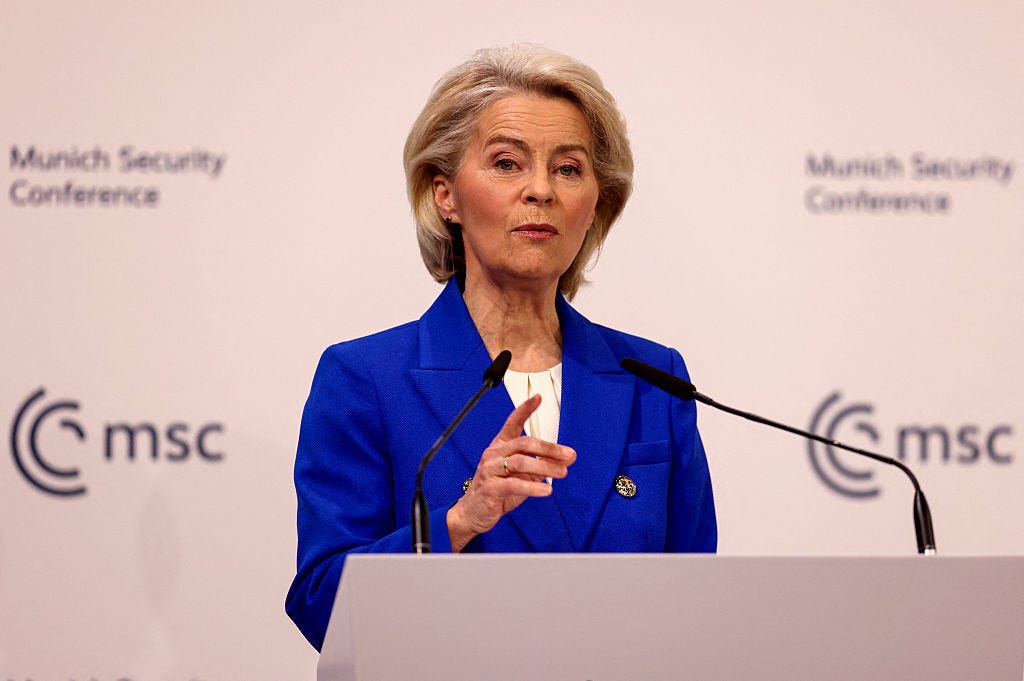
From the onset of the war in Ukraine, the EU bureaucracy decided that sanctioning Russia was the means to bring that country to its knees, and the failure of the first 19 attempts to do so has not dampened the enthusiasm to have a 20th go at it. Objections from member states and pivots by critical allies mean little. This time, von der Leyen is hitting Russia where it really hurts:
“As important peace talks are underway in Abu Dhabi, we must be clear-eyed: Russia will only come to the table with genuine intent if it is pressured to do so. This is the only language Russia understands. That is why we are stepping up today. The Commission is putting forward a new package of sanctions - the 20th since the start of Russia’s war of aggression against Ukraine.
The new package of sanctions covers energy, financial services and trade.”
Later in the same press release, we learn that far from failing, sanctions are actually achieving their stated objective:
“Russia’s fiscal revenues from oil and gas dropped by 24% in 2025 compared to the previous year, the lowest level since 2020, widening its fiscal deficit. Oil and gas revenues in January will be the lowest since the war began. Interest rates stand at 16%, inflation remains high.
This confirms what we already knew; our sanctions work, and we will continue to use them until Russia engages in serious negotiations with Ukraine for a just and lasting peace.”
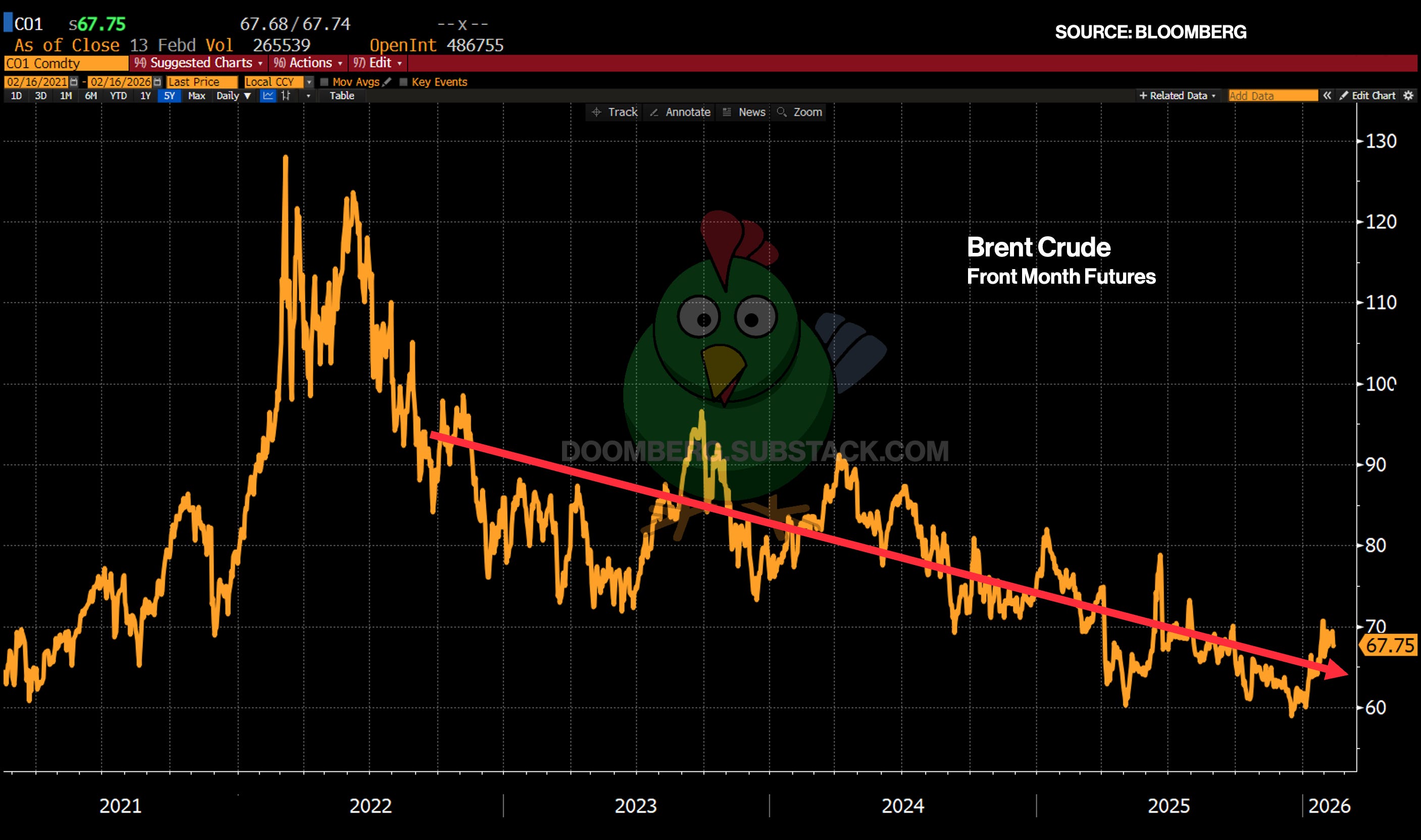
We note with interest that the Russian ruble was among the world’s strongest-performing currencies in 2025, and that the price of oil repeatedly reached multi-year lows over the past 12 months. It seems to us these drivers had more to do with lower oil and gas tax receipts in Russia than sanctions, which were designed to “turn the Russian ruble into rubble” and have only caused the price of oil to be higher than it would be otherwise.
The global glut in hydrocarbons has occurred in spite of sanctions, not because of them, and the subsequent decline in Russian revenues is proof that crashing energy prices was always the most effective tactic available to inflict pain on the Kremlin.
In many ways, what is in the proposed 20th sanctions package is far less interesting than what isn’t, not least because the EU is running out of things to sanction. One Russian company in particular—a firm that plays an outsized role in European energy markets and is widely acknowledged to be a global leader in advanced technologies, including those with the most dangerous military applications—looks set to remain free to do business across Europe, unimpeded as it collaborates with major European players to literally keep the lights on in adversarial nations. We write, of course, of Rosatom, the Russian state-owned nuclear company. How the EU has chosen to treat it can teach us much about the nature and future of the entire sanctions regime.