
Peak “Not Oil”
Natural gas liquids and the war in Iran.

“Big Oil is a club, and they’ll do everything to keep me out.” – T. Boone Pickens
Few Americans give a second thought to how they access energy for cooking. To a rough approximation, 60% of US households cook directly with electricity—tapping one of the largest and most reliable grids in the world—with the rest largely relying on ready access to cheap natural gas delivered via pipeline. Some homes, mostly rural, leverage propane for the task, with 500- or even 1,000-gallon tanks sitting just outside, ready to supply fuel for months at a time. These options are usually so plentiful and clean-burning that fuel cost and indoor air quality rarely register as conscious considerations.
Not so for most of the world. Take India, which competes with China for the title of world’s most populous nation. As recently as the mid-1990s, most dwellings in India relied on kerosene—a middle distillate of crude oil that doesn’t burn particularly cleanly—for indoor cooking. Such indoor use is linked to higher rates of respiratory symptoms, reduced lung function, and cardiorespiratory disease, motivating the country’s leaders to encourage a shift to cleaner-burning light hydrocarbons instead.
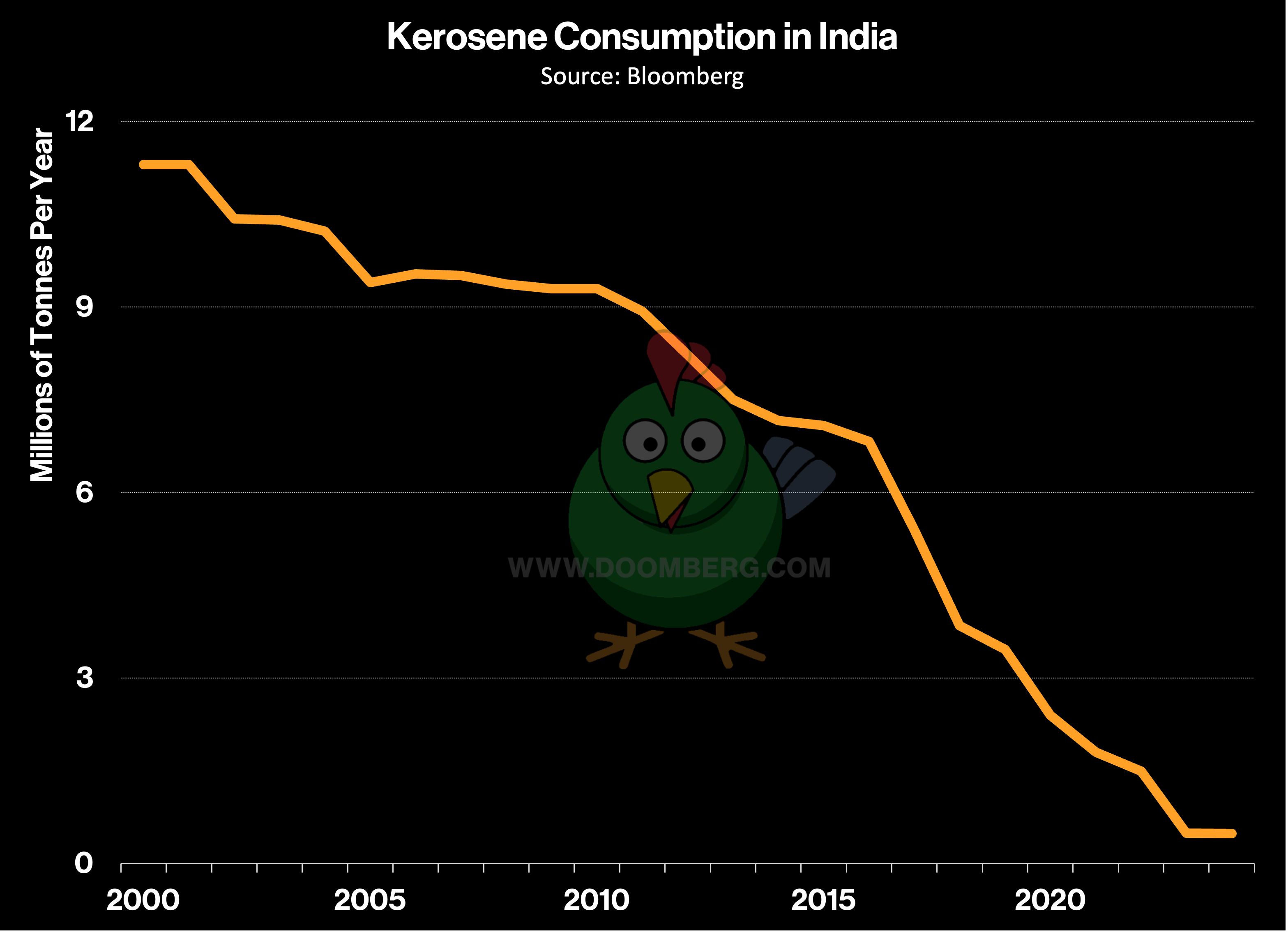
Lacking a sophisticated natural gas pipeline network and saddled with a notoriously rickety electricity grid, India settled on the lightest and cheapest hydrocarbons that could be readily liquefied in bulk and widely distributed in consumer-friendly cylinders: liquefied petroleum gas (LPG). Sold predominantly as a mixture of propane and butane, LPG’s affordability and logistical advantages drove rapid market-share gains across much of the country. Since the turn of the new century, kerosene consumption in India has plummeted by more than 95%.
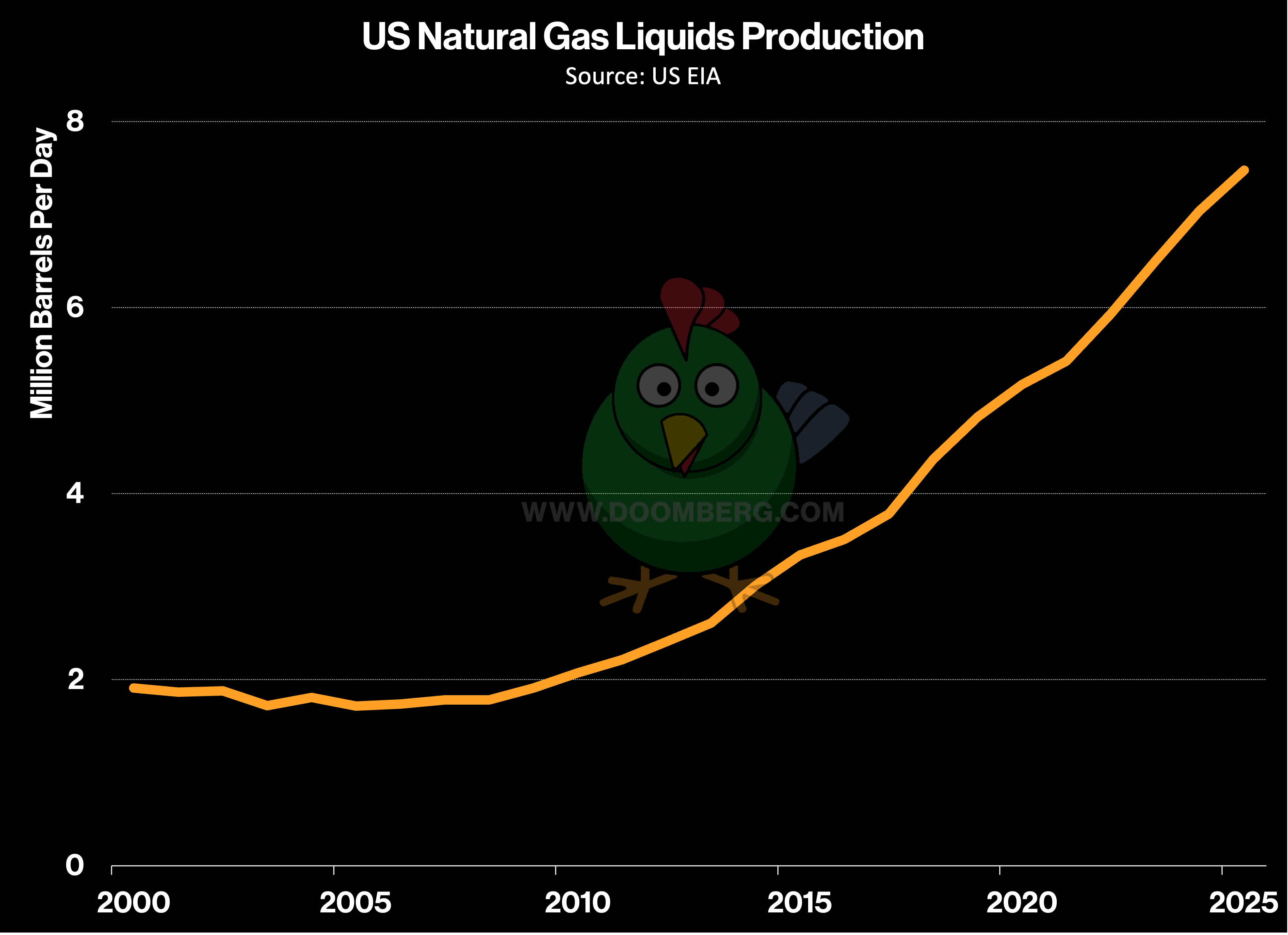
Propane and butane are major components of natural gas liquids (NGLs), the two making up approximately 40–50% of a typical NGL barrel. Concurrent with India’s broad cooking-fuel transition, the US shale revolution led to a historic explosion of NGL production, and some 8 million barrels per day (bpd) of the stuff will soon be brought to the surface in America alone. As a direct consequence, the US has become by far the largest exporter of LPG in the world.
Proponents of the erroneous concept of peak oil have largely dismissed the historic growth in NGL production, arguing that only crude oil matters in such debates. We can think of at least three reasons they hold firm to such an odd belief. First, NGLs have the word “gas” in their name, not “oil,” which doesn’t seem like much to go on, but for many, this is apparently more than enough.
Second, the pace of NGL growth exceeds the economy’s current inherent demand. It takes time to develop the requisite engines needed to convert their embodied energy into work, and this has led to depressed pricing for NGL components compared to crude, at least on an energy-content basis. Finally, the manner in which the economy spontaneously adapts to the sudden emergence of a new supply of cheap, plentiful fuel is often subtle, with the magic hand of the market working beyond the line of direct sight of many observers.
As we’ll see, the war in Iran served as an accelerant for such work, dialing up the need to increase hydrocarbon fuel fungibility across a multitude of applications. The economy that emerges from the conflict will be one better able to handle the tsunami of new NGL supply arriving in the decades ahead, a just-in-time evolution that will have a profound impact on global energy markets. Let’s stay one step ahead of the energy-abundance pessimists and explore why.