

“If everyone is thinking alike, then somebody isn’t thinking.” – George S. Patton
Prior to the war in Ukraine, the port facilities at Novorossiysk had historically handled over 30% of Russia’s oil exports, making the city one of the most important chokepoints in that country’s vast export system. Situated along the now hotly contested Black Sea—a major strategic gateway to international waters for both Russia and Ukraine, and a body of water Western powers have been aggressively seeking to turn into a “NATO lake” since Russia’s annexation of Crimea in 2014—Novorossiysk had largely been considered an off-limits target. Its role in balancing international energy markets made attacking it too risky and potentially counterproductive.
That changed in November, when Ukrainian long-range air and sea drones hit, forcing a temporary halt in the port’s oil exports, arresting roughly 2.2 million barrels per day (bpd).
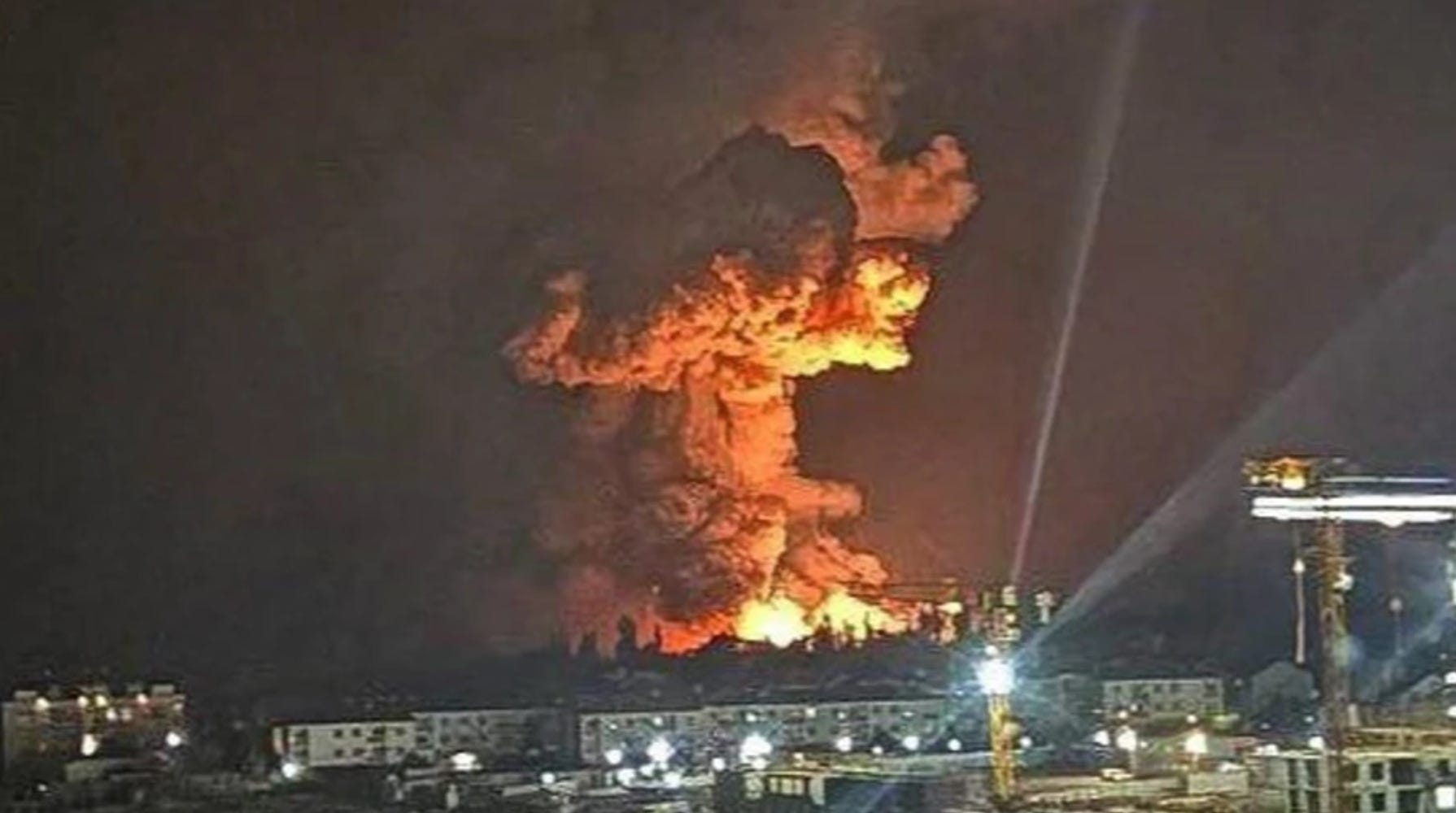
When Iran made closing the Strait of Hormuz a key response to the US-Israel attack in March, the world was thrown into an urgent energy crisis, the consequences of which have yet to fully play out. One immediate effect was the sudden increase in the strategic value of every other barrel of oil on the planet, especially those available for export. Given this development, you might have assumed that the European countries underwriting Ukraine’s military and budget needs would have cautioned their ally against further attacks on Novorossiysk. If they did, such advice fell on deaf ears:
“Explosions were reported overnight on April 6 in the southern Russian port city of Novorossiysk, with local residents saying drones attacked an oil terminal and damaged a residential building. The attack is the latest in a string of Ukrainian long-range strikes on Russia’s most important oil terminals on the Baltic and Black Sea coasts in recent weeks, as Kyiv looks to restrict the windfall gained by Russia from soaring world oil prices.
The strike was later confirmed by Ukraine’s General Staff and a source in the Security Service of Ukraine (SBU). Six of the terminal’s seven oil-loading stands, used to load and unload tankers, were damaged, the source told the Kyiv Independent. The attack also hit key ground infrastructure, including the pipeline control unit and the oil metering station.”
The latest attacks on Novorossiysk came just days after the US Department of State took the unusual step of publicly warning against such moves, issuing a formal demarche to the Ukrainian ambassador in Washington.
Among European leaders, there still seems to be, at best, indifference to the potential second- and third-order consequences of attacks on Black Sea oil depots. In fact, a week after the latest salvos, German Chancellor Friedrich Merz hosted Ukrainian President Volodymyr Zelenskyy in Berlin, where the two signed yet another strategic defense partnership, this time focused on how Germany could further help its ally with drone production. That those drones would eventually be used in similar future attacks on Russia’s oil export capacity seems a certainty.

Whether the indifference is justified will be determined in the weeks ahead, for Novorossiysk doesn’t just move Russian crude to international markets. It is also the primary outlet for 80% of the oil exports of a landlocked country that has become the second-largest source of imported oil for the European Union (EU). Soon enough, Brussels won’t just have a Hormuz problem.
It’s time we talked about Kazakhstan.