

“I am a man of fixed and unbending principles, the first of which is to be flexible at all times.” – Everett Dirksen
In late September, French naval forces boarded and immobilized the Boracay, a Benin-flagged oil tanker sailing off of France’s Atlantic coast. Carrying crude from Russia to India, the Boracay is part of what Western leaders call the “Russian shadow fleet,” a term with no legal standing under international law that refers to sanctioned ships insured by non-Western entities. Russian President Vladimir Putin blasted the move as piracy in neutral waters. After a short news cycle, the ship was released and allowed to continue its course.
Two months later, attacks on the sanctioned fleet escalated dramatically. Several tankers were struck by naval drones, actions for which the Ukrainian Security Service has openly taken responsibility. Another was apparently hit just yesterday. Although no lives were lost, the flagrant attacks against unarmed ships caused outrage in many countries. President Recep Tayyip Erdoğan of Turkey publicly condemned the assaults as “unacceptable” and issued a stern warning that they should halt.
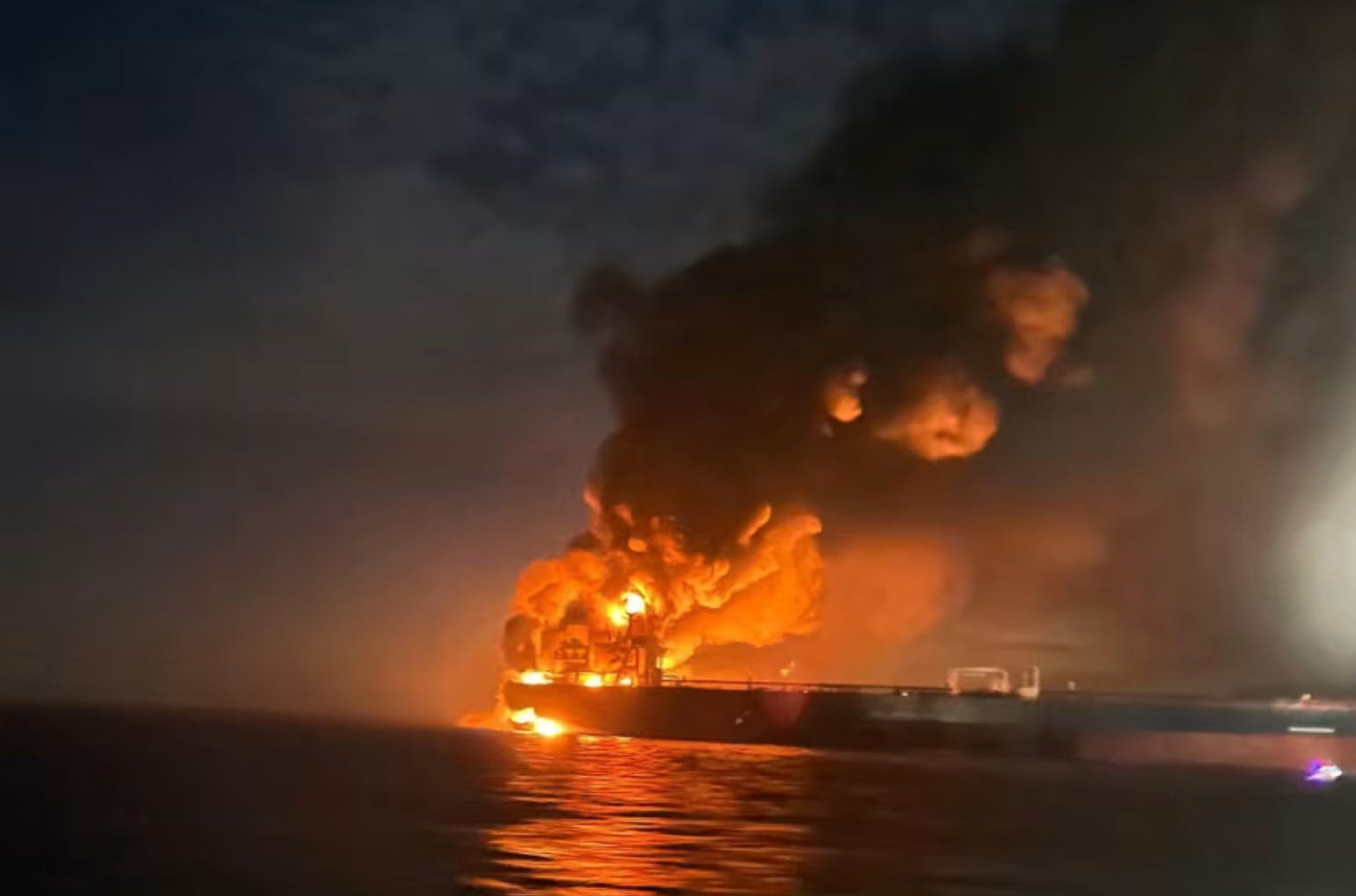
Stopping these tankers from transporting Russian oil has become an obsession for Western leaders, who believe the associated money brought in is critical to financing Russia’s war effort. The thinking goes that if these ships are blocked and that revenue is cut off, Russia’s economy will suffer significant damage and Putin will be forced to the negotiating table in a weakened position. Considering that there are approximately 1,240 ships in the shadow fleet, it seems an unlikely goal to achieve, but the recent bout of attacks is certainly having an impact on global logistics:
“The cost of war risk insurance for ships sailing through the Black Sea — a critical trade zone for commodities such as grain and oil — jumped after attacks by Ukrainian special forces on infrastructure including Russia’s Novorossiysk port.
War risk insurance prices have risen from about 0.25 to 0.3 per cent of a ship’s value in early November to between 0.5 and 0.75 per cent this week, Marcus Baker, head of marine and cargo for broker Marsh, told the Financial Times, bringing price rises to as much as 250 per cent.
A commodities insurance broker at another firm said that prices for their clients had risen more than 200 per cent.”
As we have long argued, sanctioning strong countries not only doesn’t work but nearly always backfires, and we expect a similar outcome here. As evidenced by the reaction of insurers, the cost of shipping will rise for everyone, not just sanctioned ships—a price that will ultimately be passed on to global consumers. Additionally, if the campaign continues to escalate, commodity prices will undoubtedly soar across a global economy that simply cannot do without Russia’s vast supply.
In such a scenario, Russian oil producers would more than make up any lost volume with higher prices, something they have consistently done since the war broke out. Putin has already threatened to cut off Ukraine from the Black Sea entirely, a move that would only inflame the situation further.
The affair does, however, raise questions that few have taken the time to ponder: Just how important are seaborne oil exports to Russia’s economy, anyway? Would stopping these shipments be the hammer blow it is assumed to be? Having crunched the numbers ourselves, we arrive at an answer that might surprise many.