

“Reality leaves a lot to the imagination.” – John Lennon
Around this time last week, the war in Iran was impacting markets roughly as we suspected it would. The entire hydrocarbon complex was bid higher—including coal and, especially, liquefied natural gas (LNG)—and the spread between Brent crude and West Texas Intermediate (WTI) expanded by some 40%. Something changed mid-week, however, and as the conflict continued to escalate, that spread suddenly began to narrow. By Sunday’s wild futures opening, the two grades reached parity, but have since widened again.
Although it is hard to pinpoint precise cause and effect in chaotic markets like these, we suspect a story that broke last Wednesday had something to do with these gyrations:
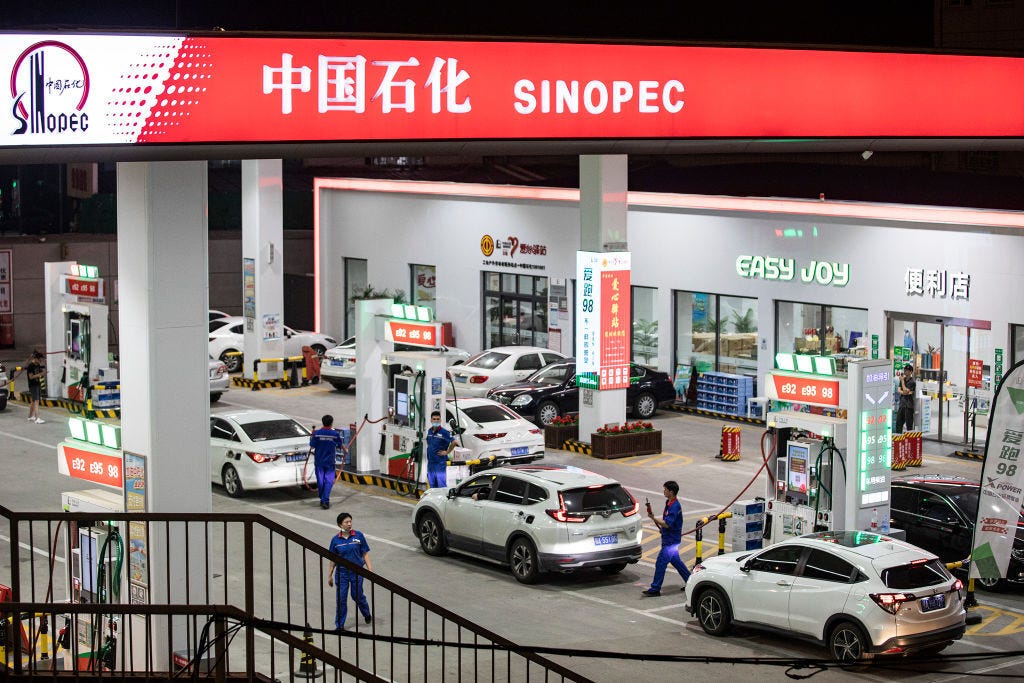
“China’s government has told the country’s top oil refiners to suspend exports of diesel and gasoline as an escalating conflict in the Persian Gulf disrupts the arrival of crude from one of the world’s largest producing regions.
While the country is only the third-largest supplier of oil products into the region — its vast refining sector primarily serves domestic demand — China’s curbs just six days into a war reflect a scramble across Asia to prioritize domestic needs as the crisis in the Middle East deepens…
At a meeting earlier this week, refiners were told to stop signing new contracts and to negotiate the cancellation of already-agreed shipments, the people said. An exception was made for jet and bunker fuel held in bonded storage and supplies to Hong Kong and Macau, they added.”
China going full turtle so early is a stark reminder of our friend Sir JJ’s wise quip that oil is worthless until it gets to a refinery. Should the Strait of Hormuz remain closed for much longer, we expect that national protectionism will ultimately open up wide regional disparities in the price of gasoline, diesel, jet fuel, and other refined products. Whatever crude China gets its hands on from here—including from its massive stockpiles of emergency reserves—will be directed toward satisfying internal demand, thank you very much.
The US, on the other hand, is not only the world’s largest oil producer by a wide margin, it is also a net exporter of refined products, selling significant quantities of gasoline and diesel in international markets. (It also imports a fair bit, and you can probably guess to where and why.) Price spikes and empty refineries overseas will motivate domestic refineries to run full speed, increasing demand for WTI. Combine this with the fact that US companies also export various grades of crude and import others to optimize refinery runs, and that President Donald Trump has not yet limited exports or implemented price controls to stabilize prices for US consumers, and the drive back to parity between Brent and WTI makes sense.
Whatever the basis for the temporary Brent/WTI convergence—and others have put forward alternative explanations—oil price spikes of this magnitude usually lead to sharp economic contractions in the short term and significant long-term increases in crude supply. There is little reason to expect a different outcome now. However, China’s move does signal the likely sequence of how events will unfold in the short and medium term, making a straightforward exercise of identifying the nations that will suffer first. In a global, every-country-for-itself fragmentation of energy markets, who will feel the hurt? Let’s tour the world and assess the risks.