
Awkward Truths
The media can’t seem to explain the collapse in China’s domestic solar installations.

“Weather forecast for tonight: dark.” – George Carlin
We often quip that the best proof that something was predictable is having predicted it. While not totally accurate—dumb luck and broken clocks are still things—nailing a complex call in the face of cocksure counter-commentary is anything but unsatisfying. It also confirms that our mental model is still operative in the way that matters most: it remains useful for further predictions.
In August of 2025, we produced a bonus presentation for paying subscribers titled Cocktail Party Trivia: Winning the Renewables Debate With Friends and Family (available here). In it, we elaborated extensively on our current mental model in which a working understanding of electric grids became a tool for predicting when the forced introduction of intermittent renewables would cause things to break. Some 31 minutes in, we warned that China’s solar miracle was reaching the limits of feasibility, and that the breakneck pace of new construction would soon have to slow.
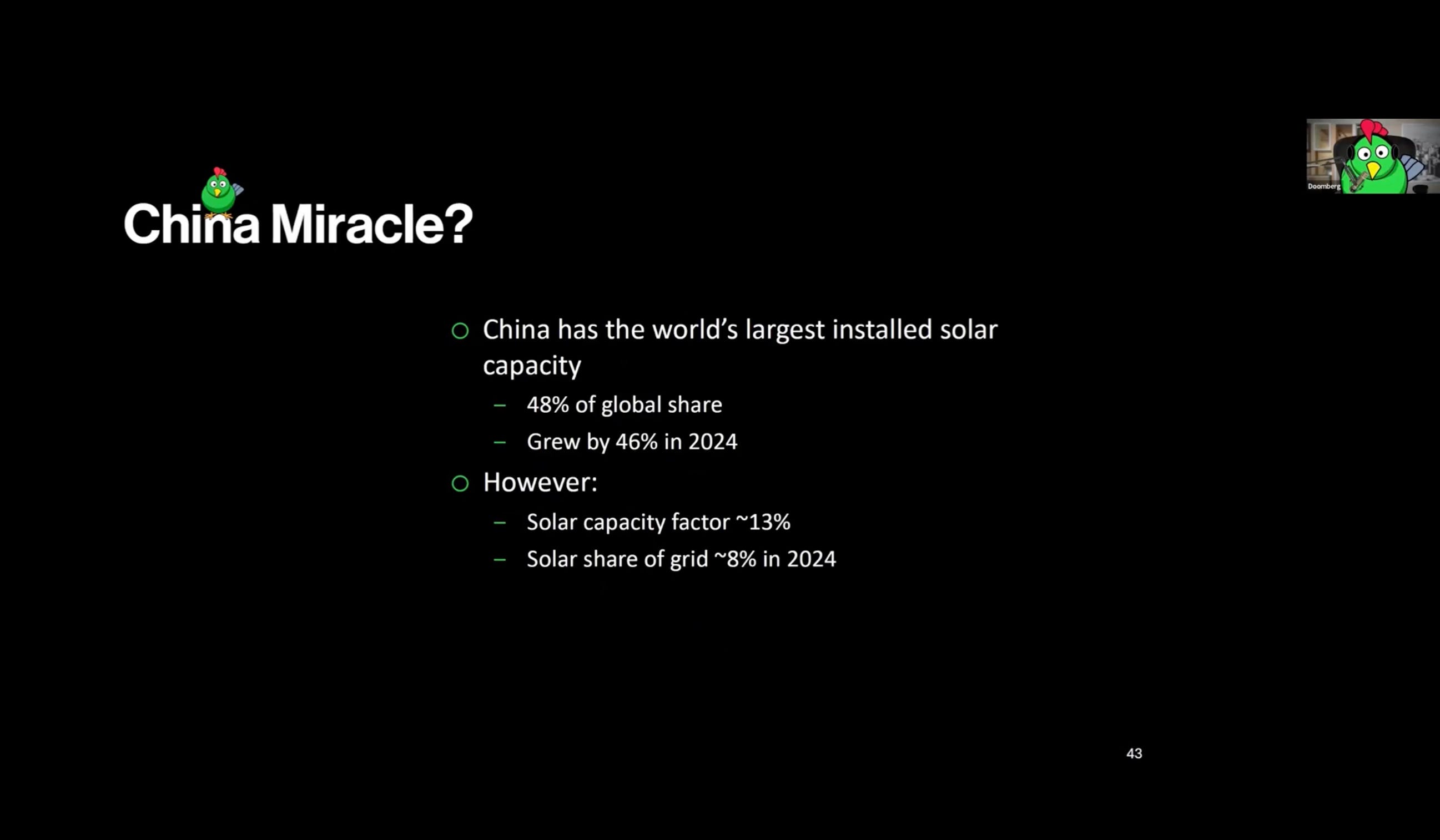
At the time, China was on pace to smash global records for new solar installations, and legacy media outlets were falling over themselves to heap praise on Beijing’s bold climate leadership. On social media, the Silicon Valley crowd was lamenting how the US was desperately falling behind its main competitor in the artificial intelligence race, hooked on “yesterday’s fuels” like natural gas. US President Donald Trump came under withering criticism and was pounded for his efforts to save the domestic coal industry. That China still relies on coal for the vast majority of its electricity was rarely mentioned.
Imagine our lack of surprise, then, when we opened our weekend edition of the Financial Times to find Adam Tooze’s latest lament, “Wasting China’s solar panel surplus is madness”:
“The closure of the Strait of Hormuz has roiled energy markets. Consumers are calling out for alternatives to unreliable fossil fuels. And yet we are in a world of surplus solar panels. Let that sink in.
After a huge surge in investment since 2020, Chinese companies have the capacity to produce a vast 1,000 gigawatts of panels per annum. The world cannot absorb the supply. More than 40 Chinese solar manufacturers have gone bust, been bought out or delisted. A third of the workforce at the top five survivors has been made redundant.
Clean power, on a scale that would have seemed utopian at the time of the Paris climate treaty in 2015, is now within reach. The price of solar panels has fallen to rock bottom. And yet factories are idling.”
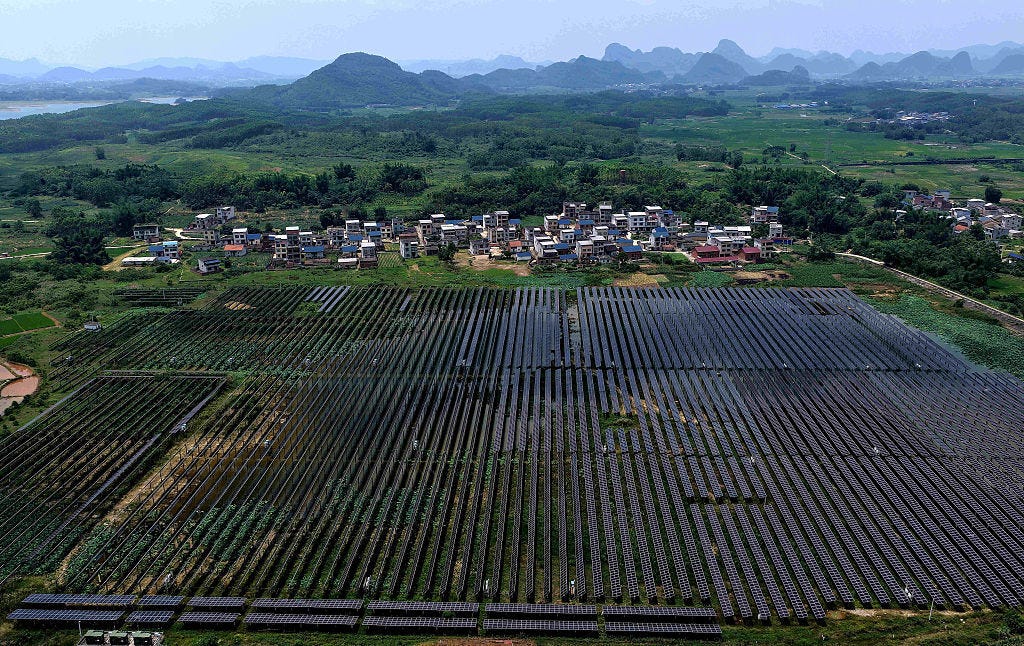
While Tooze contemplates several plausible reasons for the current mess, he ultimately settles on poor central planning in Beijing. In essence, subsidies were overdone, and the inevitable—yet temporary—reckoning is now being digested. The real mystery, apparently, lies in why other nations aren’t rushing to scoop up these bargain-basement green deals.
While not wrong at the margins, such explanations lie downstream from the root cause, and a full unraveling of what’s really happening in China would trigger a conversation few on the progressive environmental left are prepared to have. Far from being an exception that proves what’s possible, China is an exception that proves our rule: When intermittency swamps dispatchability, grids begin to break. Let’s put numbers to our argument and predict what likely comes next.