

“Every disadvantage has its advantage.” – Johan Cruyff
Within the Washington establishment, few periodicals are adorned with the stature and prestige of Foreign Affairs. Published by the powerful Council on Foreign Relations, the magazine is known for its thoughtful, US-centric essays, whose ideas often gain acceptance within its elite readership. As a means to understand where US government policy and legislation might be headed, Foreign Affairs is an invaluable resource.
In a recent contribution titled “The Real Threat to Taiwan: America Is Preparing for the Wrong Kind of Crisis,” author Eyck Freymann—whose credentials quite literally could not be more pedigreed—opens with an ominous but entirely plausible hypothetical: In small but measurable steps, China begins to implement something of a soft blockade on Taiwan, all but daring the US to intervene. Although no individual provocation rises to the level of casus belli, before long, China has a stranglehold over the island—leverage it steadily uses to achieve Xi Jinping’s vision of reunification.
Suitably hooked by Freymann’s scenario, we were taken aback by the casual way in which he framed possible US countermoves (emphasis added):
“The White House quickly recognizes the core issue: the burden of escalation is now on the United States. China’s actions, although deeply alarming, do not automatically rupture any supply chains. They are not traditional acts of military aggression. Taiwan’s most important exports—the GPU chips that power the artificial intelligence revolution—can continue to flow to the United States, at least for now. But if Washington accepts this new normal, it will have been checkmated. Starved of the tools to defend itself, Taiwan will soon lose its leverage to resist China’s coercion.
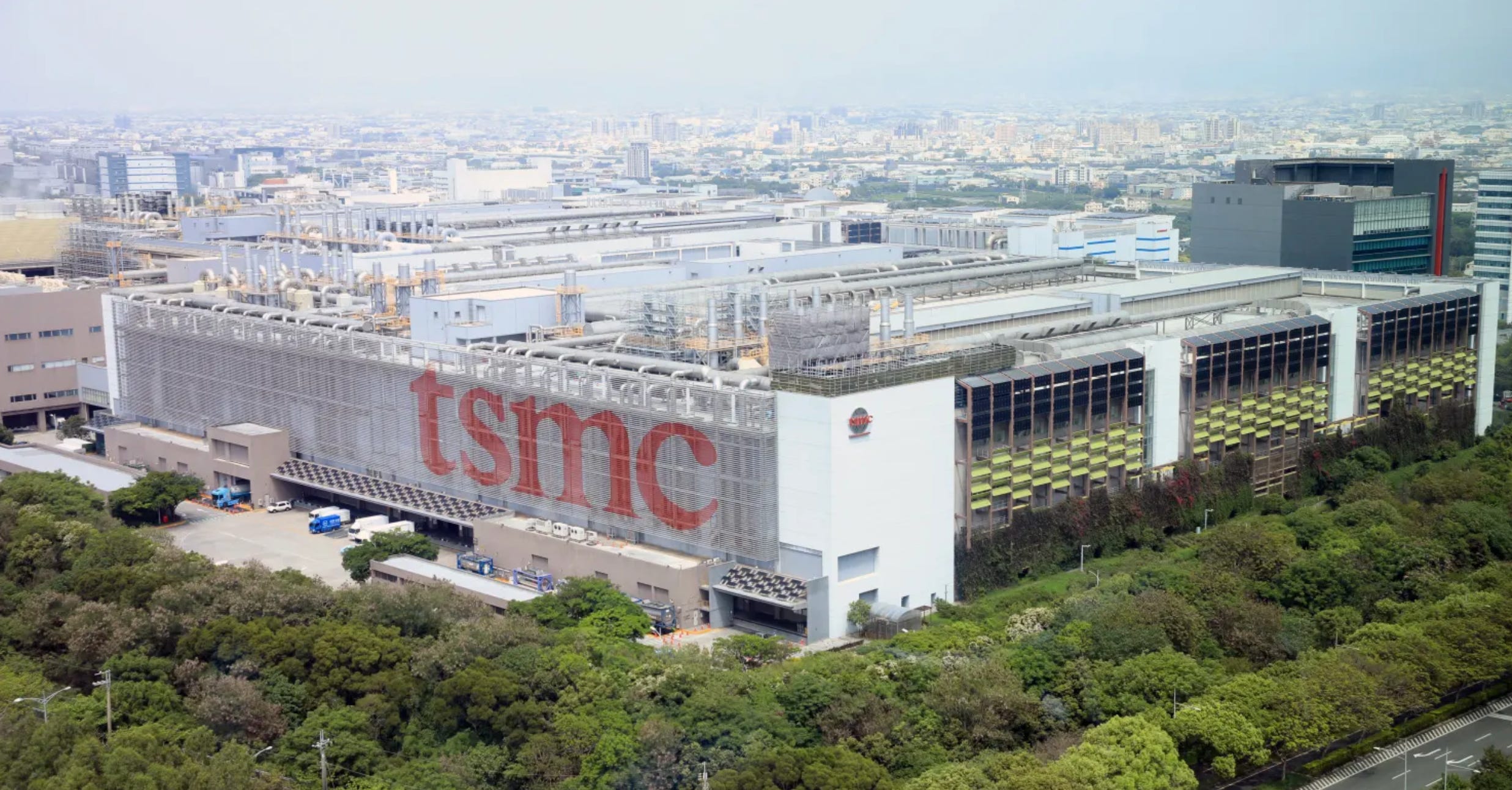
Washington cannot trust that Beijing will let Taiwan export GPUs freely forever. At any point, the United States could theoretically destroy or disable TSMC’s fabrication plants to prevent China from accessing them. But such an action would trigger a financial panic. China will therefore seize the advantage in cutting-edge AI capabilities unless Washington chooses to inflict a devastating economic blow against itself, antagonizing the entire world in the process.”
After rereading the passage several times to ensure we understood the message, it dawned on us that, if this is actually what the US foreign-policy establishment is telling itself, inner Washington’s assessment of China’s AI capabilities is so wildly detached from reality as to be dangerous.
Longtime Doomberg readers will know that China’s AI strategy is of great interest to us. In April of 2024, we published “Chip Shot,” a piece detailing how China systematically works to dominate strategic industries and how Western market leaders regularly downplay the risks as events unfold. In “Is the Chip War Already Lost,” published in December of the same year, we warned that analysts were wildly underestimating the pace of innovation in China’s chip sector—a development with far-reaching consequences for global trade. In May of 2025, we released “On the Ascend,” which focused specifically on what Huawei’s new chip architecture would mean for Chinese chip independence. Finally, last December, we returned with “Trump Card,” which speculated on the potential impact of China’s growing AI capabilities on the value of global equities.
Contrary to Freymann’s framing, we believe that by the time China makes its inevitable move on Taiwan, TSMC’s assets won’t be a prize Beijing needs to close the gap with US competitors, for that gap will already be good and closed. In fact, Beijing is almost certainly waiting for such a milestone to be achieved, at which point TSMC’s facilities become a source of leverage over Washington, not the other way around. If the headlines coming out of China in the past few weeks are to be believed, we are on the cusp of entering such an era. Let’s explore recent developments through this lens.