

“An absolute can only be given in an intuition, while all the rest has to do with analysis.” – Henri Bergson
As we put a bow on a successful 2025 and gear up to do it all over again in 2026, the Doomberg team has much to celebrate. We exit the year at all-time highs in overall subscribers, paying customers, and Pro Tier members, surpassing our growth goals in all three categories. We are contemplating writing a book and have an excellent agent shopping the project right now. The launch of our sister publication, Classics Read Aloud, is performing even better than we had hoped, and the cross-over interest is encouraging (although not surprising). Both remain the work of our lives, and we have so much in store for the coming year.
We believe that our strong commitment to continuous improvement is key to the brand’s success. A critical element of our strategy in this regard is to occasionally look back at what we wrote, measure it against subsequent events, and share an honest assessment of what we got right and what we got wrong. Is there any better way to learn?
We began with a bang in January, on the day of President Donald Trump’s second inauguration. In a piece titled “Misreading the Room,” we speculated that the new administration would have little patience for Venezuelan President Nicolás Maduro standing in the way of the country’s vast energy resources:
“In a hypothetical scenario where Venezuela and Guyana merged under a business-friendly government—either formally, through a redrawing of borders, or less so via a strategic agreement that resolves the Essequibo dispute—the possibilities for hydrocarbon development are enormous. Guyana is already producing more than 650,000 barrels of oil per day and is well on its way to over a million. The combined resource base, unconstrained, is arguably capable of supporting 5-10 million barrels per day of oil production.
Constipating such an outcome is Maduro himself, of course, which is a key reason we suspect his days may be numbered. As if on cue, The New York Times—a paper that, despite its claimed progressive bona fides, always seems to advocate for war—published an opinion piece last week titled ‘Depose Maduro.’ Amazingly, the word ‘oil’ does not appear once in the missive, a strategic omission that surely gives the game away.”
Fast forward to today, and the US Navy has assembled an armada off of Venezuela’s coast, with Trump agitating for regime change, and the country’s president-in-waiting, María Corina Machado—fresh off her conspicuously timed receipt of the Nobel Peace Prize—openly advertising that her country’s oil and gas riches would be available to international investors once Maduro is deposed. Forever thus.

A piece that hasn’t aged quite as well was our February missive, “The US Is Not Broke.” At the core of that article was our belief that the US federal government has far more tools at its disposal to bring its fiscal crisis under control, assuming a modicum of political will:
“Critics argue that certain expenditures—defense spending, Medicare, Medicaid, and Social Security—are all but untouchable, and combined with interest expenses, these outlays alone now exceed total receipts. This is nonsense. The US Constitution does not mandate any of these programs, and all of them are replete with fraud and waste. The budget for Health and Human Services has more than doubled since the Affordable Care Act (ACA) was passed in 2010, adding an extra $1 trillion to US spending. This, despite the fact that the ACA was sold as a measure to lower overall healthcare costs. The Pentagon’s budget is approaching $1 trillion and has now failed seven consecutive audits, and the Department of Defense remains the only federal agency to have never passed one. These are scandals ripe for exposure, and Trump seems intent on doing just that…”
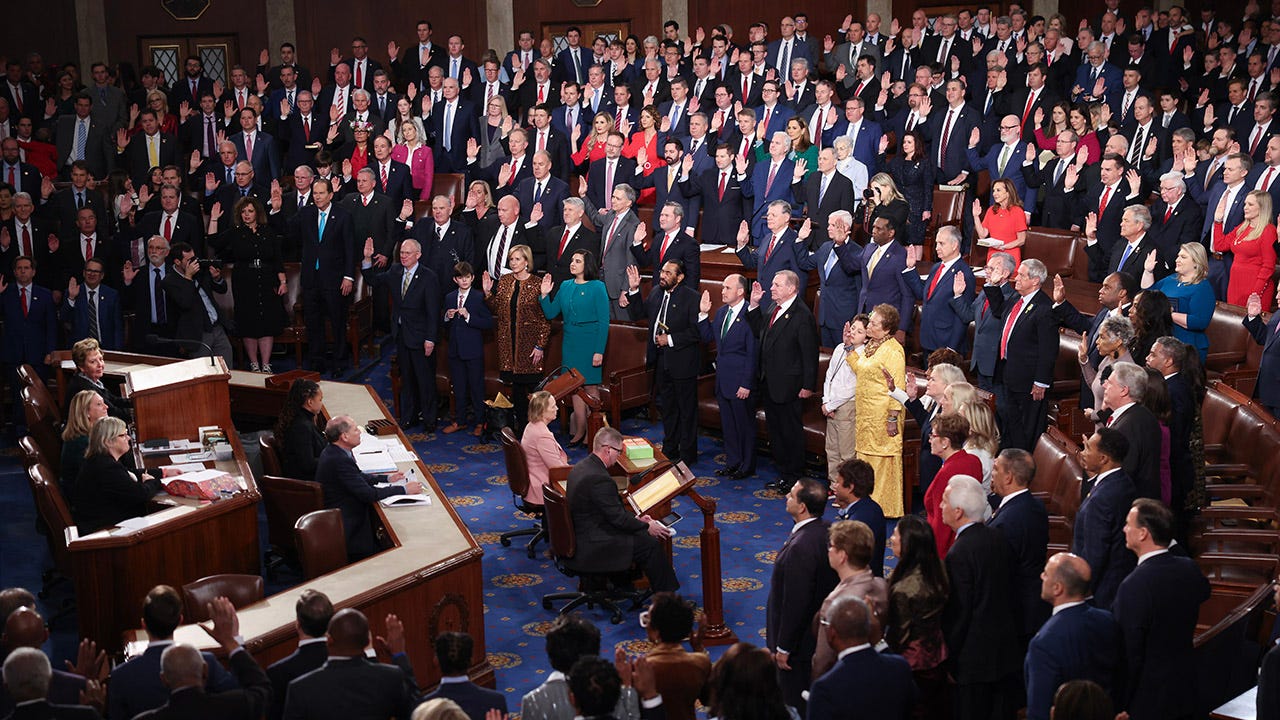
Unfortunately, as the monumental underperformance of the Department of Government Efficiency (DOGE) initiative proved, Washington’s political will is nonexistent. Cutting government spending in a meaningful way is impossible, and our imagining otherwise—as caveated as our prose might have been—was simply wrong. In fact, the first year of President Trump’s second term has led us to develop a new mental model for how things will go for him over the next three years: In a secret ballot vote, 80% of sitting members of Congress in both houses would vote to impeach Trump and oust him from power. There are no Republicans and Democrats in the nation’s capital. They all play for the same team, and you ain’t on it.
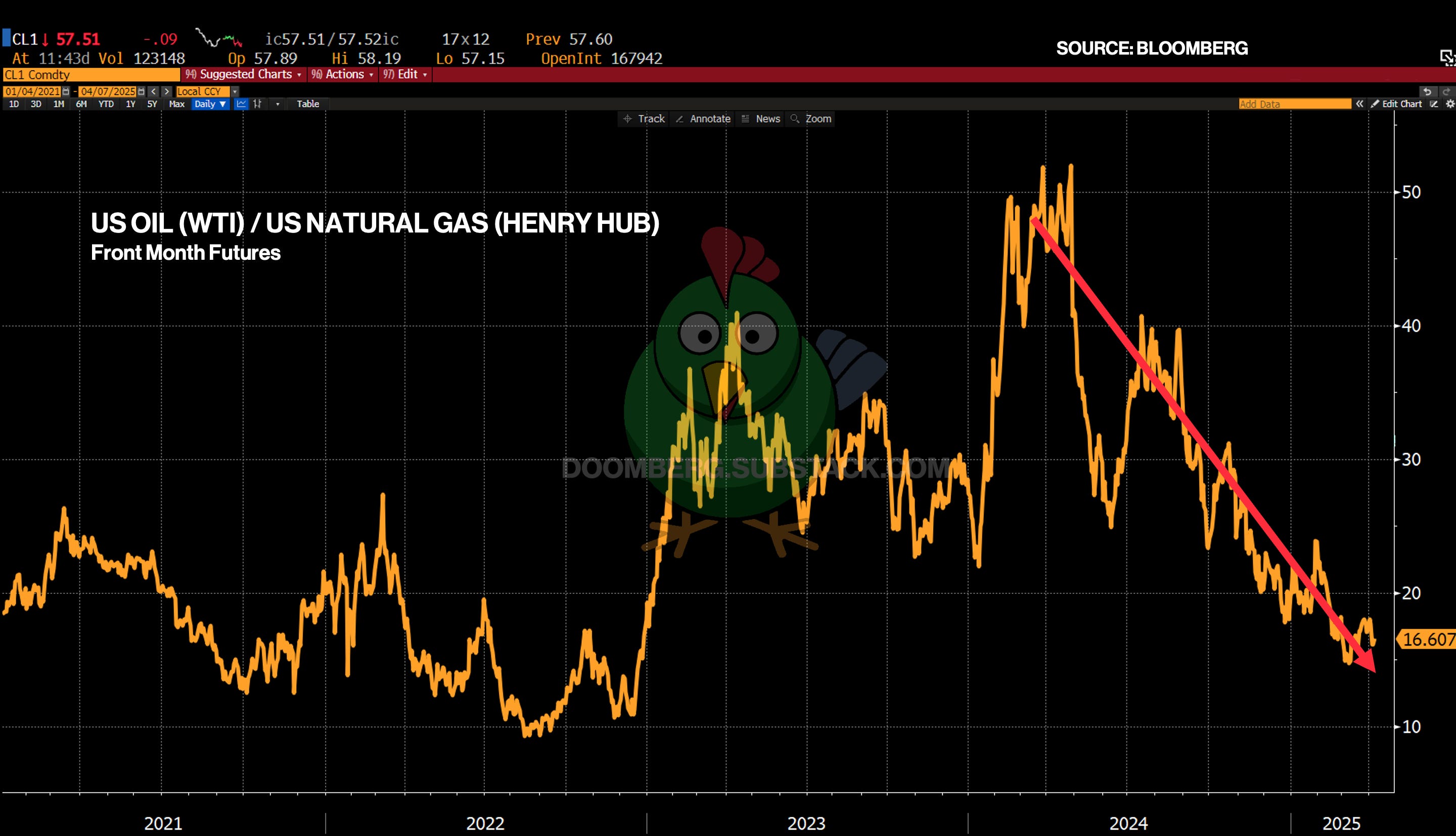
We got back on the horse in April with “As the Pieces Lie,” an article that came on the heels of the Organization of the Petroleum Exporting Countries’ (OPEC’s) decision, supported by its allies, to undo substantial crude oil production cuts. The move sent oil prices nosediving. We laid out the fundamental and often underappreciated change the shale revolution wrought with its coproduction dynamic, which affects both oil and gas markets. We went on to reiterate our call that the oil-to-gas ratio would continue to dive lower as a result of this regime and the new demand for natural gas driven by the data center boom:
“Since the onset of this [coproduction] development, natural gas has been the nuisance byproduct in the US, routinely flared on-site or sold at steep discounts—a situation only worsened by OPEC’s efforts to prop up crude oil prices. When domestic gas prices sank to rock-bottom levels, producers in the gas-only fields of Appalachia and Haynesville were forced to curtail. But what if the situation reverses? What if gas becomes substantially more valuable just as oil prices tank?
It’s not as ridiculous as one might think.”
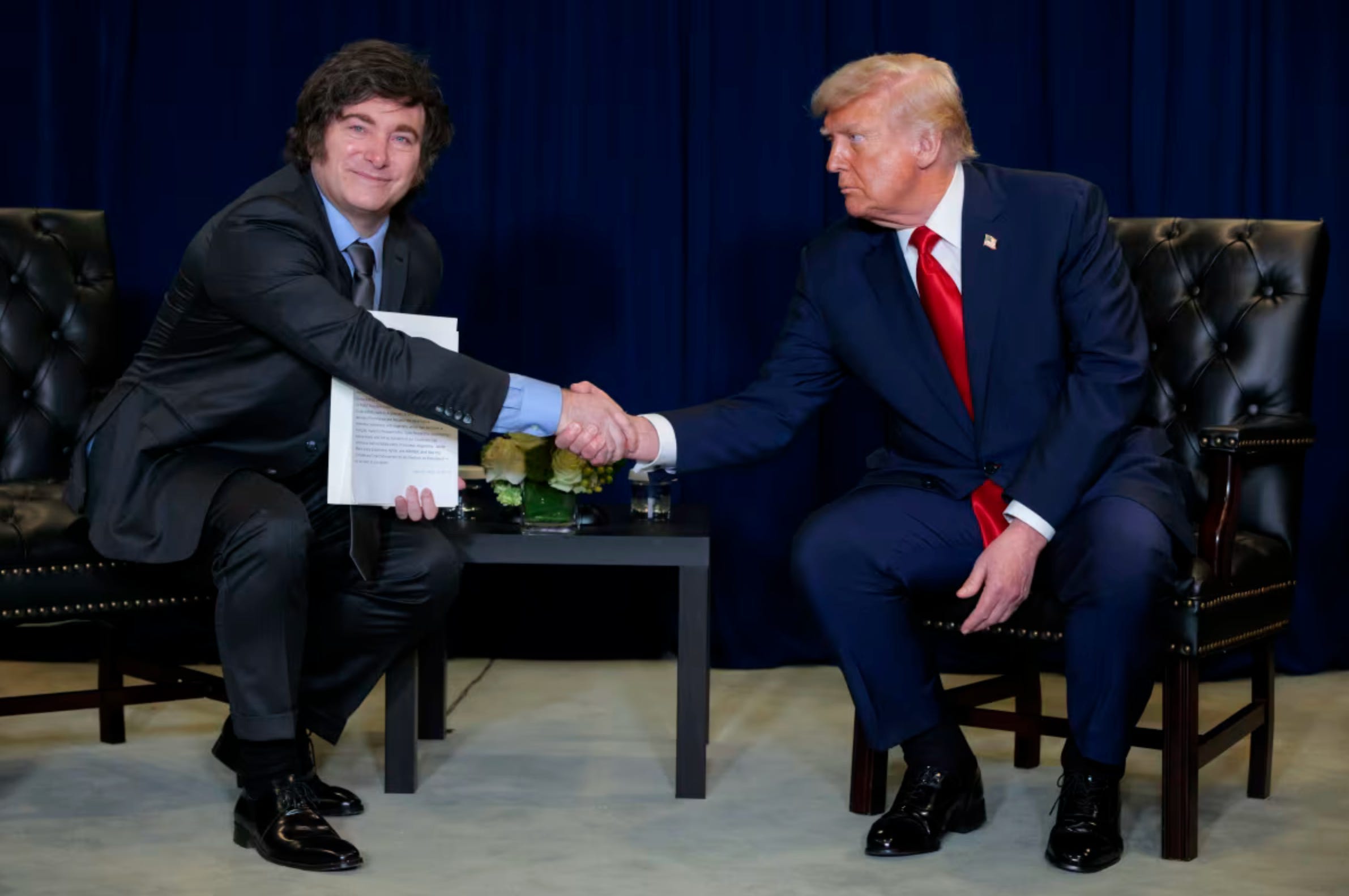
Our take on Argentina and its mercurial president, Javier Milei, was another mixed bag. It started out well enough. In a September piece titled “Mosaic Theory,” which covered our views on what Trump’s Monroe 2.0 doctrine would mean for the major countries in Central and South America, we all but called the upcoming bailout of Milei by the US administration:
“The Trump administration may feel compelled to mount a rearguard action in Argentina on behalf of loyal ally President Javier Milei, whose political party was roundly defeated in local elections over the weekend. Although the results do not directly impact his standing at the federal level, the electoral setback is spooking markets just as oil and gas production in the country’s massive Vaca Muerta shale resource is taking off. The country’s bonds and currency both plunged on the news. Milei remained defiant after the setback, vowing that ‘there will be no retreat in government policy.’”
In the so-far-not-yet category is our prediction that Argentina would be forced to cut a favorable deal with Burford Capital, a publicly traded finance firm that specializes in maximizing commercial litigation and arbitration recoveries. Burford holds a sword of Damocles over Argentina’s national oil company, Yacimientos Petrolíferos Fiscales, a situation we first covered in “Unsticking Argentina” back in July. Two weeks after “Mosaic Theory,” we openly speculated in “Energy Bind” that the US bailout of Milei might trigger the deal:
“Significant cash and stock undoubtedly will be needed to secure a settlement of those claims. But with the theoretical prize on offer at least as large as Burford’s current enterprise value, the motivation to strike a compromise would seem high.”
Effectively, the opposite of what we predicted has happened. Rather than leaning on Milei to clear the Burford liability off the board, the market interpreted Trump’s decision as one that would empower the Argentine president to hold out for better terms in any negotiated settlement. Burford’s stock has slumped accordingly.
Our final lookback is from a piece published just two months ago titled “Final Countdown,” which predicted that the days of the Brussels swamp of bureaucratic quicksand known as the European Union were numbered, and that its demise would be an ugly one. The piece generated some controversy, especially this nugget:
“When the likes of von der Leyen speak of ‘our democracy,’ the meaning is held in the narrow ring of the possessive ‘our.’ Any notion that Brussels cares about—let alone adheres to—the will of the citizens it currently rules is a laughable pretense. As the war in Ukraine grinds toward its inevitable conclusion, and Europe’s economy continues to buckle under the weight of centralized mismanagement, expect the political shenanigans to escalate. Vote rigging, false flags, and lawfare campaigns are hallmarks of an insecure regime losing its grip on power. Expect the EU to collapse with a bang, not a whimper.”
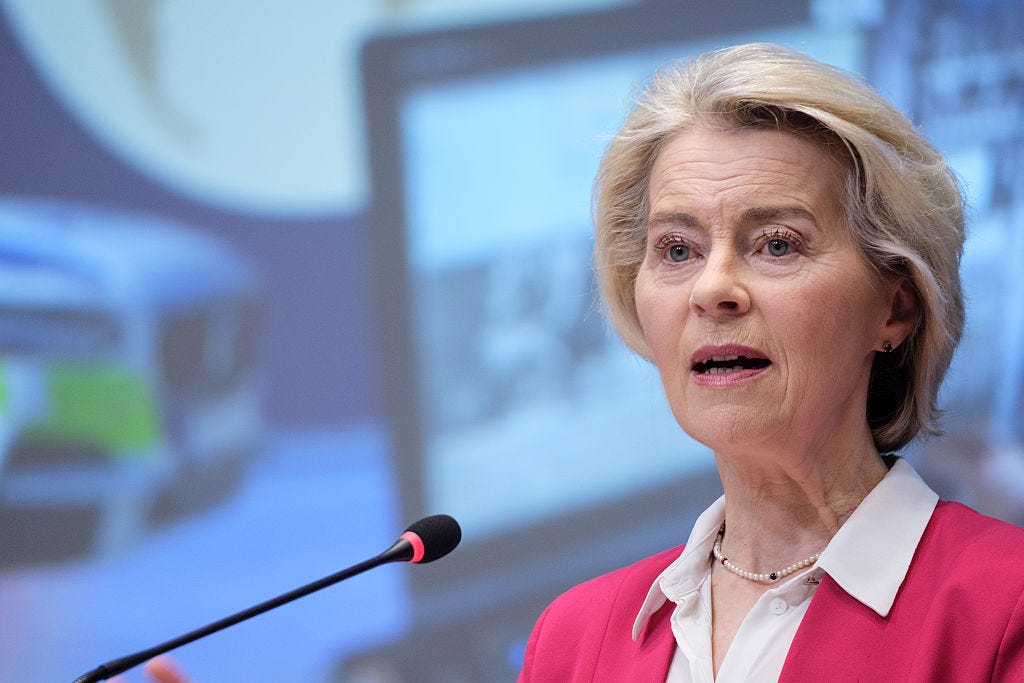
By now, most of you must have read the Trump administration’s brutal assessment of Europe and its disastrous “union” in the updated national security strategy document. This has shocked European leaders and driven a deep wedge between them and their most important ally. We won’t repeat the most eyebrow-raising bits here, but suffice it to say the document’s release supports our prediction.
If you have made it this far and are still a free subscriber, please note that all who upgrade to paid coverage between now and midnight on December 22 will receive complimentary access to a 40-minute presentation titled Investing in Energy: Fundamentals for Strategic Decision Making. The talk was sent to existing paid and Pro subscribers as a gift last week, and the reviews have been quite positive.
For paid and Pro subscribers, please accept a heartfelt thank you for your business. We look forward to serving you in 2026!
“♡ Like” this piece if you’re imperfect too.

You have ruined some weekends, provided cause to upend my thoughts but most of all provided independent and objective analysis of news, economics and the world around us.
The exact reason I am a paid subscriber and can’t recommend Doomberg enough.
Thanks little green chicken, enjoy the Christmas season with friends and family and may 2026 provide us with more clues and fascinating insights.
The failure of meteorologists to issue wind drought warnings is one of the great crimes of modern times.
What if you tell your readers about wind droughts and make them a topic of serious conversation? You might find a trail of deception that leads into the heart of darkness in the Evil Empire of Climate Alarmism and the Net Zero Ponzi!
Trillions of dollars spent worldwide on wind and solar have delivered more expensive and less reliable power with catastrophic damage to forests and farmlands.
Due to the combination of wind droughts and the cost of grid-scale storage there will never be a transition to wind and solar because these “unreliables” are not fit for purpose to power a post-industrial society.
Dirt farmers are alert to the threat of rain droughts, but meteorologists never issued wind drought warnings and the wind farmers never checked the reliability of the wind supply. See if you can find an industry where the operators didn’t know that there was an assured supply chain for the most important input to the factory before they started?
https://rafechampion.substack.com/p/the-sinister-threat-of-wind-droughts
Wind droughts become an existential threat to thousands or tens of thousands of people when the wind drought trap closes on a windless night during extreme weather conditions. See Texas in February 2021!
Fluctuations in solar and wind input pose the same threat in the daytime where grids lack inertia, see the pain in Spain, 2025.
The US was only one Democrat Administration away from disastrous power failures because the country is in the jaws of the wind drought trap. It is up to the Trump Administration to get them out, and to show the way for all the other western nations where suicidal net zero policies are in place.
The power crisis experienced by Texas in February 2021 was a taste of things to come if unreliable energy keeps driving coal out of the grid.
https://rafechampion.substack.com/p/defusing-the-wind-drought-trap