
Sources and Methods
Propaganda and the energy war between Russia and Ukraine.

"Seeing reality for what it is is what we call discernment. The work of discernment is very hard.” – Lewis B. Smedes
The two most significant kinetic battles of the ongoing fight between the US and its allies against the world’s most important energy exporter, Russia, and the recently paused attacks against Iran in the beating heart of the Middle East—in other words, of World War III—are deeply intertwined with global hydrocarbon flows. Cutting through propaganda thus has become at least as important to the oil-and-gas analyst as counting rigs. The two are wildly different skills, of course, which likely explains why commentary on these events by energy specialists has been so varied in quality and focus.
Approaching the challenge requires a wide aperture for inbound information, especially from sources that represent a range of beliefs, and giving greater weight to sources that consistently provide useful information, regardless of their nationality, political orientation, or pedigree. Absent such discipline, critical context can regularly be missed.
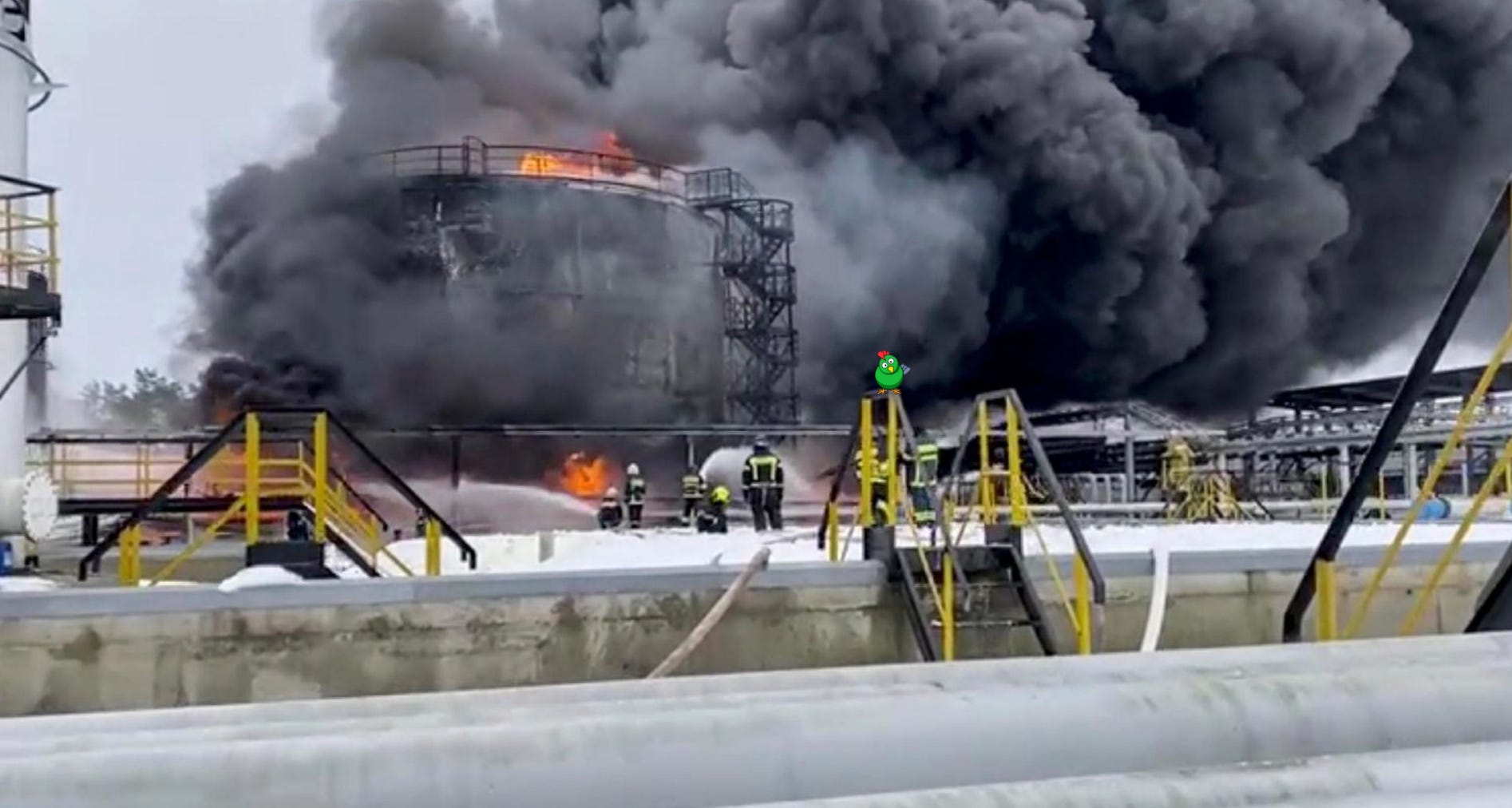
Consider Ukraine’s ongoing drone and missile campaign against Russia’s oil and gas infrastructure. On June 18, a large-scale attack on a major refinery on Moscow’s outer edge made global headlines, with video footage shocking many analysts. Here’s how the British-based Financial Times described the aftermath:
“Ukraine hit Moscow with nearly 200 drones in its largest-ever attack on the city on Thursday, striking the Russian capital’s largest oil refinery and sending huge plumes of smoke billowing over the city’s south.
Sergei Sobyanin, Moscow’s mayor, said anti-air defences had shot down at least 194 Ukrainian drones on Thursday morning in the third consecutive day of attacks.
The apocalyptic images of flame and smoke engulfing the Russian capital were a remarkable demonstration of Ukraine’s increasing capacity to strike deep behind enemy lines with its largely homegrown long-range drones.”
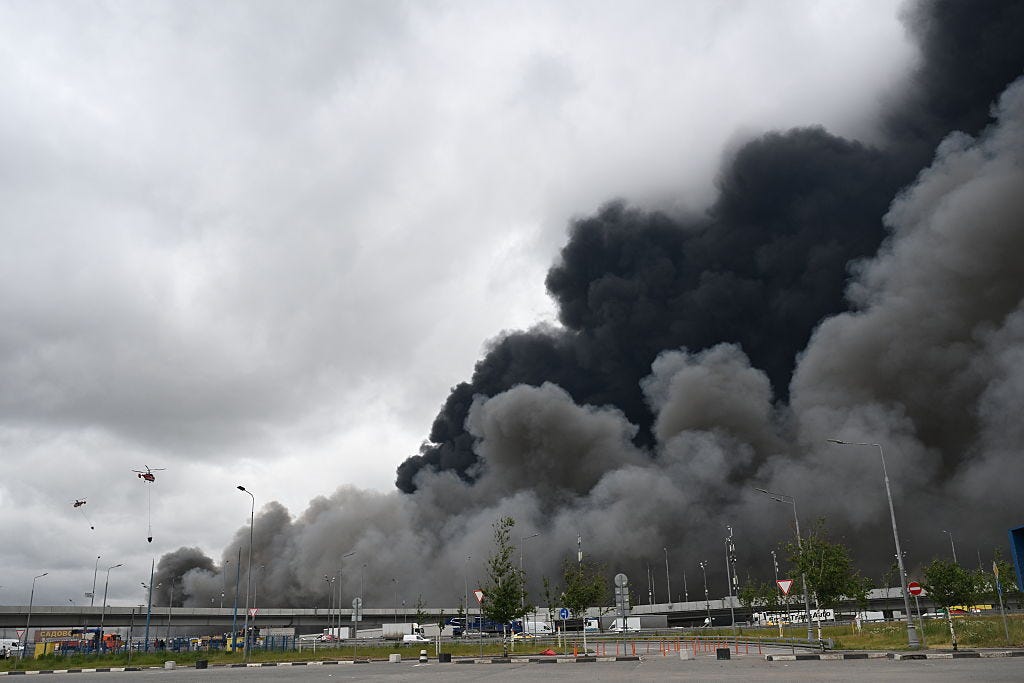
Were those “apocalyptic images” testimony to the strike’s efficacy and an ominous sign of trouble for Russian President Vladimir Putin, or might there be more to the story than the widely circulated visual evidence suggests? For clues, we turn to Simplicius’s Garden of Knowledge on Substack, which regularly puts forth a pro-Russian vantage point on global events. While nobody would confuse its 56,000-plus subscriber base with the readership scale and investigative resources of the Financial Times, an article published there a few days later seems to add important context:
“There continues to be growing confirmation that [Ukrainian President Volodymyr] Zelensky has been waging his accelerated psyop campaign of empty strikes to conceal a worsening crisis in his own country. Today we were treated to footage which revealed how his latest magician’s parlor tricks work.
It turns out yesterday’s mass strikes on Moscow which were meant to coincide with the Euro Council meeting were pure Hollywood spectacle: the drones themselves were stuffed full of kerosene mixtures in the way Hollywood stages car explosions to look more ‘dramatic’ by producing thick plumes of oily smoke.”
The blog then linked to a video clip of a purported drone interception that had been circulating on Twitter/X, screenshots of which are reproduced here:
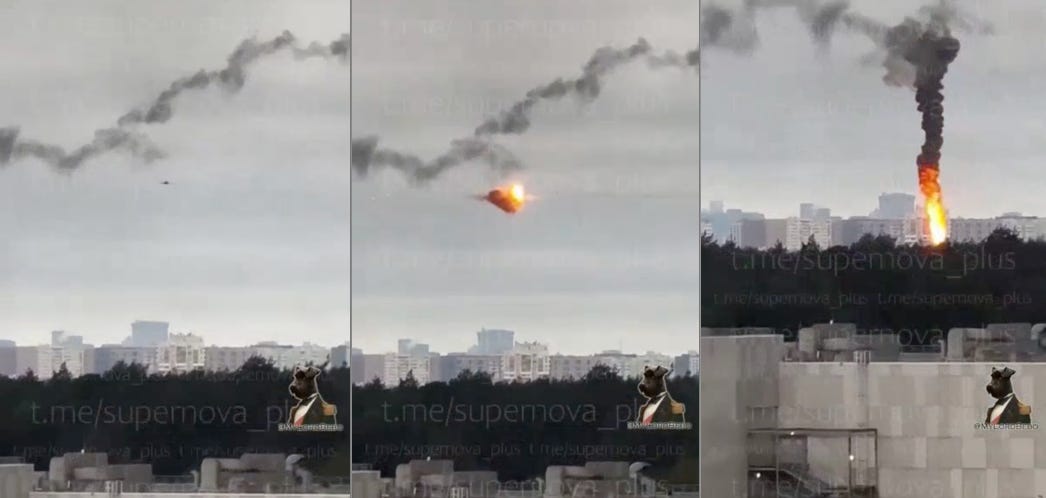
While we cannot testify to the veracity of the above footage, the prospect of Hollywood-style amplification cannot easily be dismissed, and would itself be a clever use of propaganda if true.
A few weeks after the attack, another British outfit, Reuters, was out with a report that would seem to lend credence to the efficacy camp. In it, we learn that Russia is turning to the import market to cover shortages of gasoline, allegedly a direct result of Ukraine’s drone campaign:
“An industry source said at least 60,000 metric tons of gasoline have been dispatched from India to Russia. Another source said that two tankers, with parcels of 30,000 to 40,000 tons each, have been sent.
A third source said that in total, Russia plans to import 400,000 tons of gasoline from various countries each month, including from neighbouring Belarus, which has already been exporting fuel to Russia.
Gasoline consumption in Russia is at least 110,000 tons per day in summer, when demand for fuel is high.”
What to make of this news? Whether intentionally or not, Reuters exaggerated the scale of the volumes involved. Recast in more familiar units, 400,000 tons of gasoline imported in a month is roughly 115,000 barrels per day, while 110,000 tons per day of peak summer demand is about 935,000 barrels.
Is Russia importing 12% of its peak summer gasoline demand all that unusual? Not according to Alexander Mercouris of the popular YouTube channel The Duran. In a broadcast published on July 3, Mercouris argued that Russia refines far more diesel than gasoline, and regularly turns to imports to paper over seasonal shortages of the latter fuel across its far-flung regions. While plausible, that claim seemed dubious enough to warrant further investigation. As it turns out, the United Nations (UN) tracks annual import-export data for gasoline at the country level. Here’s Russia’s:
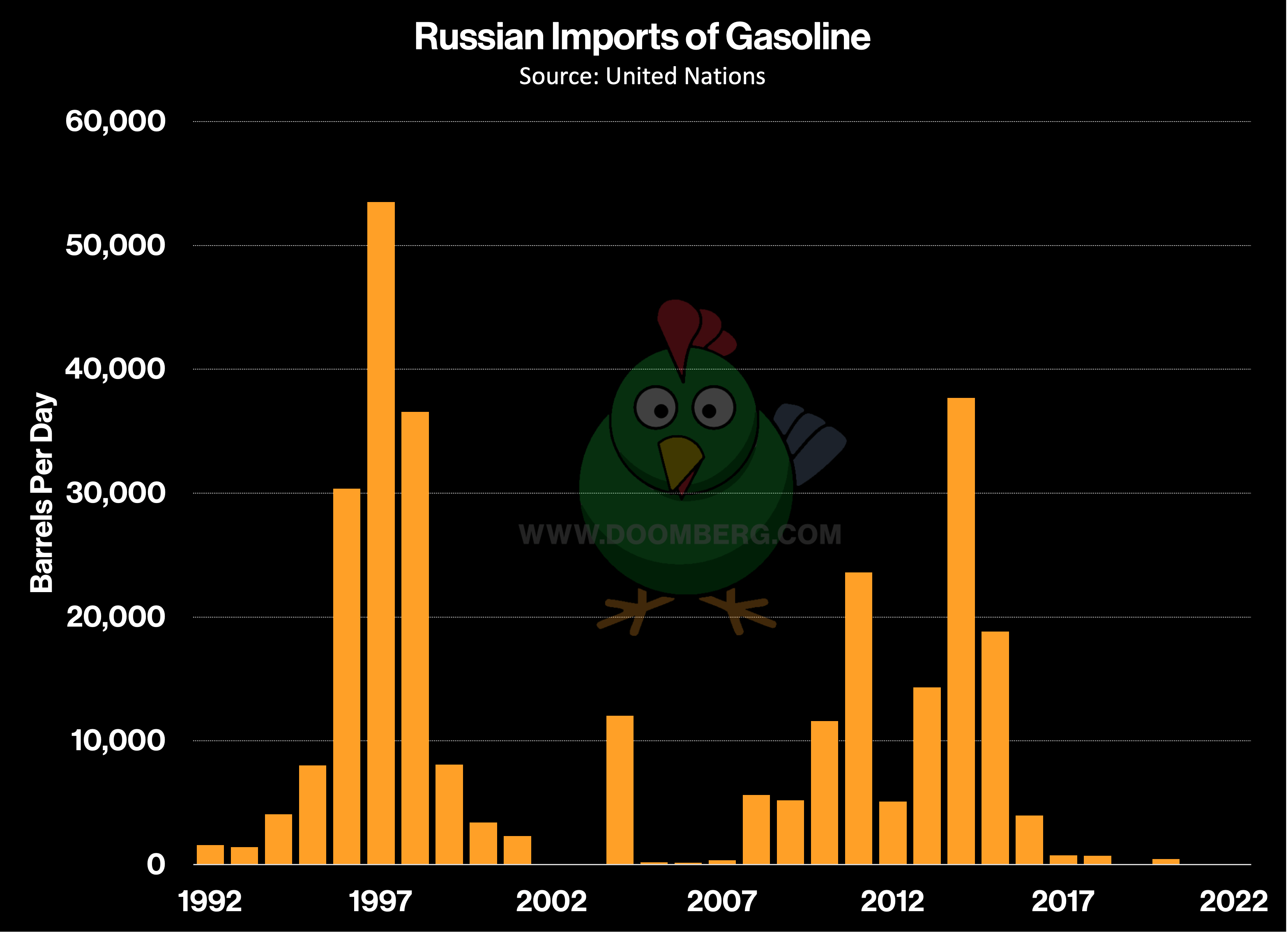
The UN data at least partially validates Mercouris. Russia does indeed import gasoline on a semi-regular basis, and the dispersion of refinery construction across the former Soviet republics would not necessarily have been planned to optimize the needs of a future Russian state on a standalone basis. On the other hand, the need to supplement Belarusian imports with those from India, along with the scale of the 2026 purchases, is almost certainly a direct result of the Ukrainian attacks.
Our verdict—subject to change should new inbound information arrive—is that the drone attacks on Russia’s refineries are a manageable nuisance for the Putin regime. For the purposes of this dispatch, that conclusion itself is not nearly as important as the methodologies used to arrive at it, as showing our homework has long been a hallmark of these pages.
We close with a lament that Western governments are actively working to make performing such analyses more challenging and, in some cases, outright illegal. This is especially so for the European Union (EU) and its leaders in Brussels.
Almost immediately after the Russian invasion of Ukraine in early 2022, the EU moved to suspend broadcasting and distribution of Russia Today (RT), Sputnik, and, over subsequent sanctions packages, additional state-aligned outlets. That made it largely illegal for any operator to publish such content in the EU via television, online platforms, and apps.
Many were alarmed by the wide net cast by the ban. The issue was recently put to the test in Germany, where three individuals were criminally charged for running afoul of the sanctions. The case made its way to the EU Court of Justice, which just handed down a rather shocking ruling (emphasis added):
“The Court replied that it is irrelevant whether or not the broadcasting of the prohibited content takes place in the course of an economic activity. The concept of ‘operator’ covers, in the present context, any person responsible, directly or indirectly, for making the prohibited content available, including in the context of a non-remunerated activity or in the operation of a website financed by voluntary contributions from third parties. The Court also clarifies that that classification depends neither on the extent nor on the duration of the broadcasting.
Only that interpretation makes it possible, as envisaged by the EU legislature, to prevent the broadcasting of the propaganda put in place by the Russian Federation and, consequently, to protect public order and security in the European Union.”
We often quote a paragraph or two from a variety of sources in these pages, even if just to argue against what is being written. A straightforward reading of the new ruling would appear to make doing even that a violation of EU law. We put the question to the artificial-intelligence chatbot Perplexity, which advised significant caution against continuing that practice with the likes of RT, and explains why no coverage from that outlet was included in this article:
“For a US-based analysis business with readers in the EU, the legally safest posture is to treat the RT ban as effectively constraining what RT material you systematically re-publish to EU-reachable channels.
Paraphrasing RT’s narratives and attributing them to ‘Russian state media’ while avoiding re‑broadcast of RT videos and long verbatim excerpts is the lower-risk way to preserve EU accessibility without asking EU operators or readers to run afoul of sanctions.”
How long before the likes of Simplicius and The Duran are similarly sanctioned, and their key enabling platforms—Substack and YouTube, respectively—are pressured to remove their content?
As soon as they accumulate a big enough audience, no doubt. Ironically, that parameter tends to scale with how accurate they are over time.
“♡ Like” this piece but keep it on the down low!
"if you gaze long enough into an abyss, the abyss will gaze back into you", said German philosopher Nietzsche. It's true for Germany and the EU - gaze long enough into more authoritarian systems like China and Russia, and become like them.
Whatever the situation on the ground in Russia/Ukraine, there is no doubt the European turn toward authoritarianism is the most disturbing outcome of that war. from my vantage point in the US, it appears that the premise that drove WWII (that's 2 not 11 🤣) has been completely lost as the current EU leadership sees their world view crumble around them and are doing all they can, which is still a lot, to maintain their power. Alas, Orwell knew what he was talking about.